
Table of Contents
- Introduction
- The Los Angeles Housing Context
- Top Things That Fail a Home Inspection in Los Angeles
- 1. Roofing Issues
- 2. Electrical Problems
- 3. Plumbing Deficiencies
- 4. Foundation and Structural Issues
- 5. HVAC System Failures
- 6. Drainage and Grading Problems
- 7. Unpermitted Additions and Work
- 8. Pest and Termite Damage
- 9. Seismic Safety Concerns
- 10. Environmental Hazards
- What Happens After an Inspection Finds Issues?
- Buyer Options
- Seller Options
- What’s a Dealbreaker vs. What’s Negotiable?
- How to Prepare for a Home Inspection in Los Angeles (Sellers)
- Why Choose a Local Los Angeles Home Inspector
- Frequently Asked Questions
- How long does a home inspection take in Los Angeles?
- How much does a home inspection cost in Los Angeles?
- Can a seller be present during the inspection?
- What is not covered in a standard home inspection?
- Do I need a separate earthquake or seismic inspection?
- Conclusion
Introduction
Buying or selling a home in Los Angeles? Don’t get blindsided at inspection. Whether you’re a first-time buyer competing in one of the nation’s hottest real estate markets or a seller looking to maximize your home’s value, understanding what fails a home inspection in LA can save you thousands of dollars , and serious headaches.
A home inspection is a professional evaluation of a property’s condition, covering everything from the roof to the foundation. A licensed home inspector examines visible and accessible components of the home and produces a written report detailing deficiencies, safety concerns, and items requiring repair or monitoring.
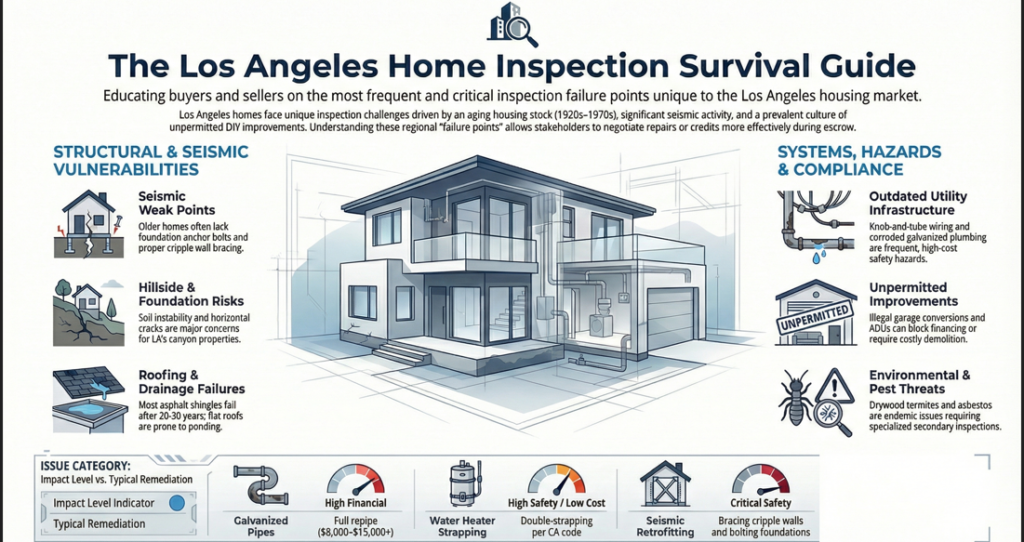
Los Angeles homes come with unique inspection challenges that set them apart from properties in other parts of the country. The region’s aging housing stock, Mediterranean climate, seismic activity, and culture of unpermitted improvements create a specific set of failure points that every buyer and seller should know. Below, we break down the most common issues found during home inspections in LA.
The Los Angeles Housing Context

To understand what fails in LA home inspections, it helps to understand the market itself:
- Mix of older and newer homes: A large portion of LA’s housing stock was built between the 1920s and 1970s, meaning many homes contain outdated building materials, aging infrastructure, and systems that no longer meet current code.
- Mediterranean climate effects: LA’s warm, dry climate with periodic heavy rains creates its own wear patterns , UV damage to roofing, drought-related soil movement under foundations, and water intrusion issues when the rainy season arrives.
- Earthquake country: Southern California’s seismic activity means homes face unique structural demands. Older homes that predate modern seismic codes often have significant vulnerabilities.
- High buyer competition: In a competitive market, buyers sometimes waive or rush inspections. But given LA’s unique risk factors, a thorough inspection is more important here than almost anywhere else in the country.
Top Things That Fail a Home Inspection in Los Angeles

1. Roofing Issues
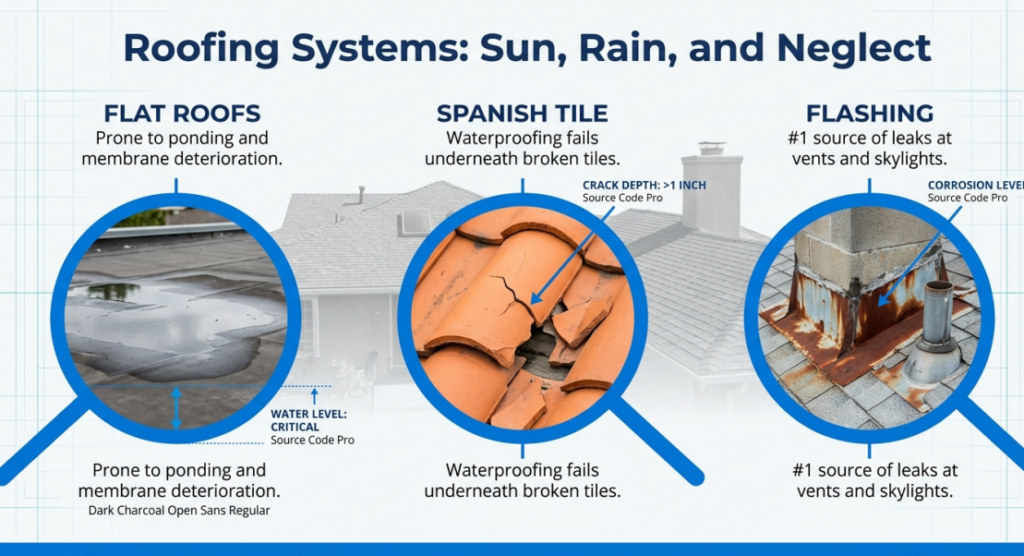
The roof is one of the most critical and frequently flagged components in any LA home inspection. Common roofing failures include:
- Aging or damaged shingles: Asphalt shingles typically last 20–30 years. Many LA homes are well past that mark. Look for cracked, curling, or missing shingles. Clay tile roofs , common in Spanish-style and Mediterranean homes throughout LA , can develop cracks and broken tiles that compromise the roof’s waterproofing.
- Flat roof ponding: Many mid-century modern and contemporary LA homes feature flat or low-slope roofs. These are prone to ponding water, which accelerates membrane deterioration and leads to leaks.
- Missing or improperly installed flashing: Flashing around chimneys, vents, skylights, and roof penetrations is a common source of water intrusion. Improper installation or rusted, separated flashing shows up on nearly every inspection report.
2. Electrical Problems
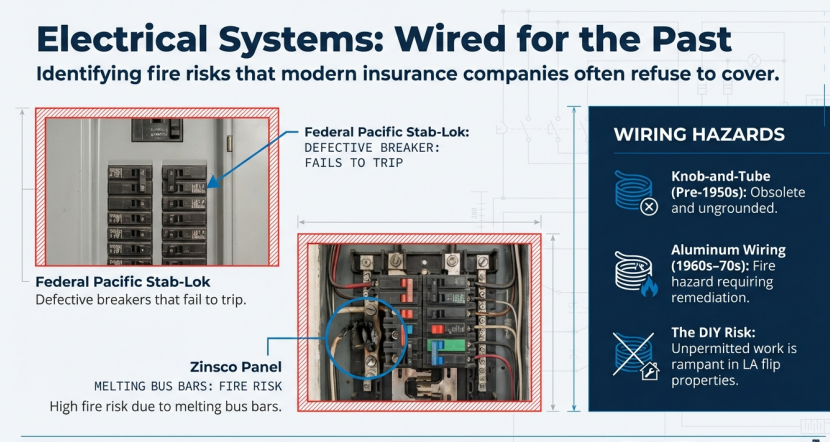
Electrical deficiencies are among the most serious inspection findings because of fire and safety risks. In LA’s older housing stock, inspectors frequently encounter:
- Outdated wiring: Knob-and-tube wiring (common in homes built before the 1950s) and aluminum wiring (widespread in homes built in the 1960s–70s) are fire hazards that many modern insurance companies refuse to cover without remediation.
- Hazardous electrical panels: Federal Pacific Stab-Lok and Zinsco panels are known to be defective and have been linked to house fires. These panels are still found in thousands of LA homes and are almost always flagged as major concerns.
- Unpermitted electrical work: LA has a particularly high rate of DIY and unlicensed electrical modifications. Uninspected work can create dangerous conditions and cause problems during escrow.
3. Plumbing Deficiencies
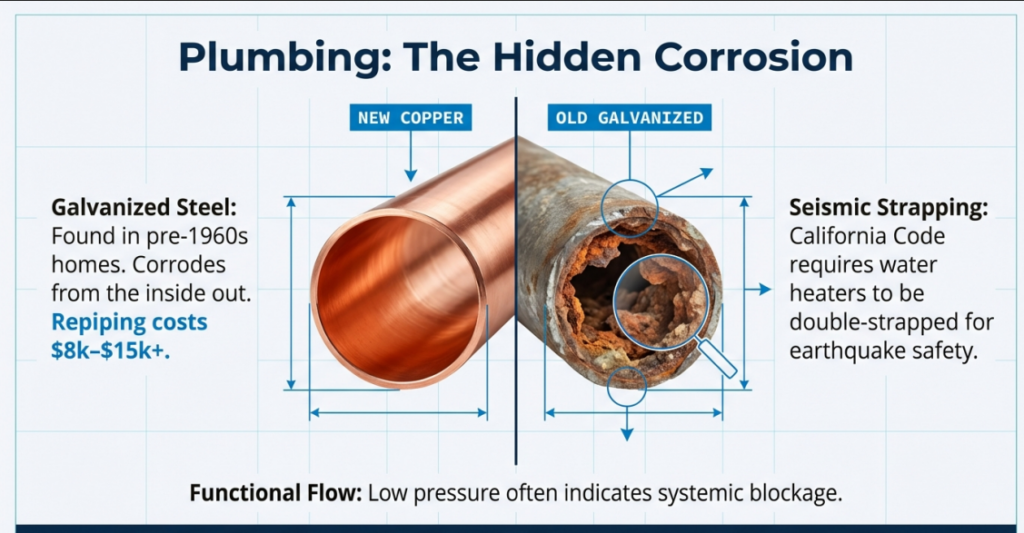
Plumbing issues range from minor inconveniences to costly repairs. Inspectors in LA regularly find:
- Galvanized steel pipes: Common in homes built before the 1960s, galvanized pipes corrode from the inside out, reducing water pressure and eventually leaking. Full repipe projects can cost $8,000–$15,000 or more.
- Slow drains, leaks, and pressure problems: These everyday issues often point to larger systemic plumbing problems. Inspectors test all fixtures and note performance issues.
- Water heater compliance: California requires water heaters to be properly strapped to the wall for earthquake safety. Missing or improper strapping is one of the most commonly flagged (and easily fixed) items in LA inspections.
4. Foundation and Structural Issues
Given LA’s seismic activity and hillside terrain, foundation and structural concerns are a major focus of any inspection:
- Foundation cracks: Both slab and raised (pier-and-beam) foundations can develop cracks over time. Small hairline cracks are often cosmetic, but larger horizontal or stair-step cracks can indicate serious structural movement.
- Hillside home concerns: LA has thousands of homes built on hillsides and canyon slopes. These properties face unique risks including retaining wall failure, inadequate drainage, and soil instability. Inspectors pay special attention to signs of slope movement and drainage issues.
- Cripple wall bracing: The short wood-framed walls between the foundation and first floor of a raised foundation home , called cripple walls , are a major seismic vulnerability in LA. Unbraced cripple walls can collapse in an earthquake, causing the house to slide off its foundation. This is one of the most commonly flagged structural issues in older LA homes.
5. HVAC System Failures
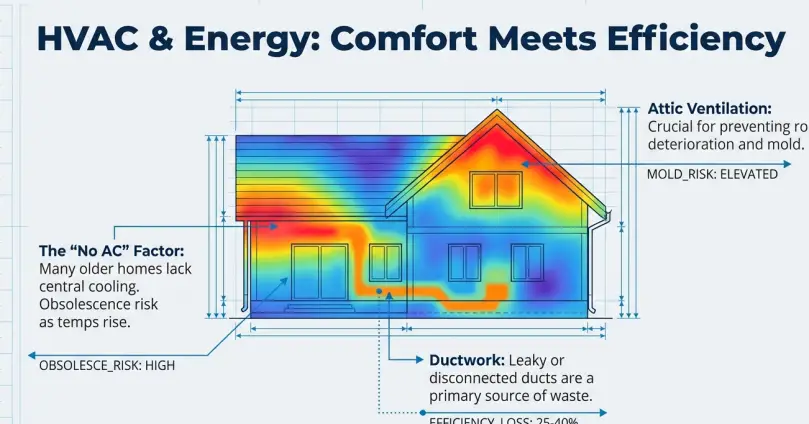
Heating, ventilation, and air conditioning systems are evaluated for proper operation, age, and condition:
- Old or improperly sized HVAC units: Many older LA homes were built with minimal climate control. Systems that are past their useful life (typically 15–20 years) or incorrectly sized for the home are frequently flagged.
- Lack of central AC: While LA’s climate is mild, many older homes lack central air conditioning , an increasingly important feature as temperatures rise. This is noted in reports, though it’s not a defect per se.
- Ductwork and attic ventilation: Leaky ductwork, disconnected ducts, and poor attic ventilation are common in older homes and contribute to energy inefficiency and comfort issues. Inadequate attic ventilation can also accelerate roof material deterioration.
6. Drainage and Grading Problems
Water management around the home’s exterior is a consistent inspection finding in LA:
- Improper grading: The ground around the home should slope away from the foundation to direct water away. Negative grading (sloping toward the house) allows water to pool against the foundation, leading to moisture intrusion and potential structural damage.
- Clogged or missing gutters and downspouts: LA’s intermittent but heavy rains can overwhelm poorly maintained drainage systems. Missing splash blocks and downspouts that discharge against the foundation are common findings.
- Hillside erosion and drainage systems: For properties on slopes, drainage systems are critical. Failed or missing French drains, erosion, and unstable slopes are flagged regularly on hillside property inspections.
7. Unpermitted Additions and Work
This is one of the most LA-specific issues on this list , and one of the most significant for buyers and lenders:
- Garage conversions and room additions: LA’s housing shortage has driven a wave of garage conversions, room additions, and ADU (Accessory Dwelling Unit) construction. When done without permits, these improvements can be unpermitted structures that may not meet safety codes.
- Major implications for buyers and lenders: Unpermitted work can affect property value, insurability, and mortgage eligibility. Lenders may refuse to finance a property with significant unpermitted structures, or require they be legalized or demolished.
- How inspectors identify unpermitted work: Inspectors compare the home’s physical condition to what’s reflected in public permit records. Signs of unpermitted work include mismatched materials, sub-standard construction quality, and spaces that don’t appear on official records.
8. Pest and Termite Damage
Southern California’s climate is ideal for wood-destroying pests, making this a nearly universal inspection concern:
- Drywood termites: These termites are endemic throughout LA County and can cause significant structural damage before being detected. Unlike subterranean termites, drywood termites don’t need soil contact and can infest any wood in the home.
- Wood rot in eaves, decks, and window frames: Moisture-related wood rot is common in exterior elements. Eaves, window sills, deck framing, and fence posts are frequently flagged for rot damage.
- Separate termite inspection recommended: A standard home inspection does not include a dedicated pest inspection. In LA, it’s strongly recommended to order a separate Section 1 and Section 2 termite report to get a complete picture of pest-related damage.
9. Seismic Safety Concerns
Beyond cripple walls, inspectors in LA look for several seismic vulnerabilities specific to the region:
- Soft-story buildings: Multi-unit buildings with open ground floors , like apartment buildings with tuck-under parking — are especially vulnerable to collapse in earthquakes. The City of Los Angeles has a mandatory retrofit program for many of these structures.
- Anchor bolts: Older homes may lack the anchor bolts that connect the wood framing to the concrete foundation. Without proper bolting, the house can shift or slide off the foundation in a major seismic event.
- Unreinforced masonry: Brick and adobe construction, found in some older LA properties, is highly susceptible to earthquake damage. Inspectors flag unreinforced masonry walls as significant safety concerns.
10. Environmental Hazards
Environmental concerns are taken seriously in California and frequently appear in inspection reports:
- Asbestos: Homes built before 1980 may contain asbestos in insulation, floor tiles, popcorn ceilings, and pipe wrap. While intact asbestos isn’t immediately dangerous, it becomes a hazard when disturbed during remodeling.
- Lead paint: Homes built before 1978 may have lead-based paint. This is particularly important for families with young children and is a required disclosure in California real estate transactions.
- Mold: LA’s periodic moisture events , from roof leaks, plumbing failures, or condensation , create conditions for mold growth. Inspectors look for visible mold and conditions conducive to growth in bathrooms, attics, crawl spaces, and areas with water damage history.
What Happens After an Inspection Finds Issues?
Finding deficiencies during a home inspection doesn’t mean the deal is dead — it means you have information to work with. Here’s how buyers and sellers typically respond:
Buyer Options
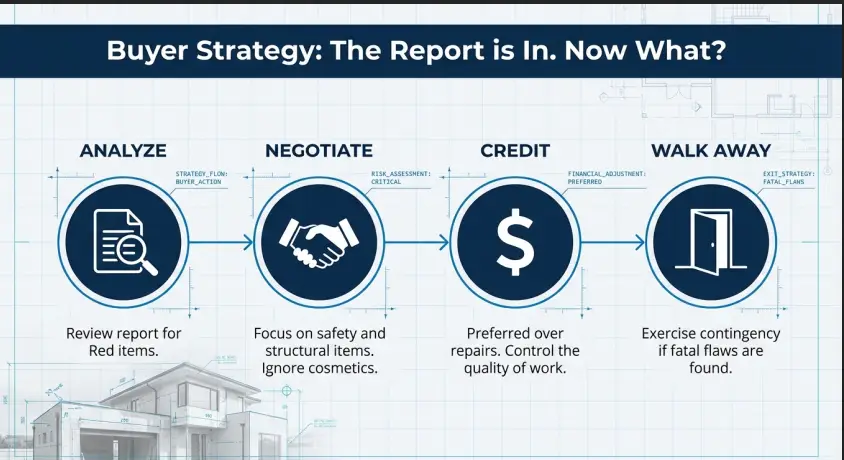
- Negotiate repairs: Request that the seller fix specific items before close of escrow. Focus on safety issues, major systems, and structural concerns.
- Request a credit: Instead of repairs, ask for a credit at closing to address the issues yourself. This is often preferred when buyers want control over the work.
- Walk away: If inspection findings reveal deal-breaking issues , like extensive foundation damage, significant mold, or a roof needing full replacement — buyers may choose to exercise their inspection contingency and walk away.
Seller Options
- Fix issues before listing: A pre-listing inspection allows sellers to identify and address problems proactively, often at lower cost than post-offer repairs, and can support a stronger list price.
- Price accordingly: Sellers who disclose known issues upfront and price the home to reflect its condition often attract buyers who are comfortable taking on the work.
- Disclose: California has some of the nation’s most comprehensive disclosure requirements. Sellers are legally obligated to disclose known material defects.
What’s a Dealbreaker vs. What’s Negotiable?
Not all inspection findings carry equal weight. Foundation issues, unpermitted structures, active water intrusion, and electrical hazards tend to be the most serious and negotiable items. Cosmetic issues, minor plumbing repairs, and maintenance items are generally less likely to derail a transaction.
How to Prepare for a Home Inspection in Los Angeles (Sellers)
If you’re selling, a little preparation can go a long way in ensuring a smoother inspection:
- Provide access: Make sure the inspector can access all panels, attic hatches, crawl spaces, and utility areas. Blocked access forces the inspector to note areas as uninspectable, which raises red flags for buyers.
- Test GFCI outlets and smoke/CO detectors: California requires working smoke and carbon monoxide detectors in all homes. Replace batteries and test all units before inspection day.
- Pull permits for past work: Review the permit history for your home through LA County’s permit portal. Be prepared to explain or disclose any work that was done without permits.
- Address visible deferred maintenance: Fix dripping faucets, broken window latches, damaged screens, and other minor items that, while not major defects, can make an inspection report look worse than necessary.
- Water heater strapping: Verify your water heater is properly double-strapped per California code. This is a simple, inexpensive fix that often shows up on inspection reports.
Why Choose a Local Los Angeles Home Inspector

Not all home inspectors are created equal , and in a market as unique as Los Angeles, local expertise matters:
- LA-specific code knowledge: Local inspectors understand the nuances of LA County and City building codes, permit requirements, and the mandatory retrofit programs that affect properties here.
- Regional architecture familiarity: From cratsman bungalows to mid-century modern flat-roof homes to hillside contemporaries, an experienced LA inspector knows the typical failure points of each style.
- Understanding of local permit history: An LA-based inspector can help you understand what permit records reveal (and what’s conspicuously missing) from a property’s history.
- ADU and garage conversion experience: With LA’s housing shortage driving a boom in accessory dwelling units, local inspectors are well-versed in evaluating these structures for code compliance and safety.
→ Schedule Your Los Angeles Home Inspection Today
Frequently Asked Questions
How long does a home inspection take in Los Angeles?
Most standard home inspections in LA take between 2.5 to 4 hours, depending on the size and age of the property. Larger homes, older homes, or those with complex systems may take longer. Plan to attend the inspection in person if possible , walking through the findings with your inspector is invaluable.
How much does a home inspection cost in Los Angeles?
Home inspection costs in LA typically range from $400 to $800 for a standard single-family home, though prices vary based on property size, age, and the scope of the inspection. Specialty inspections (sewer scope, chimney, pool, etc.) are additional.
Can a seller be present during the inspection?
Sellers are generally permitted to be present, but it’s usually better practice for buyers to have private access with their inspector. Most real estate agents recommend that sellers vacate the property during the inspection to allow for candid discussion between the buyer and inspector.
What is not covered in a standard home inspection?
A standard home inspection does not cover: dedicated termite/pest inspections, sewer line inspections (camera), chimney inspections, swimming pool/spa inspections, underground oil tanks, geotechnical/soils assessments, or mold testing. In LA, a separate termite inspection and sewer scope are highly recommended.
Do I need a separate earthquake or seismic inspection?
A general home inspection will flag visible seismic vulnerabilities like missing anchor bolts and unbraced cripple walls. However, if you want a detailed seismic assessment , particularly for hillside properties or older unreinforced masonry structures , a specialized seismic or structural engineering evaluation may be warranted.
Conclusion
Los Angeles homes come with a specific and predictable set of inspection challenges: aging infrastructure, seismic vulnerabilities, a culture of unpermitted improvements, and the unique wear patterns of a Mediterranean climate. Knowing what to expect before inspection day , whether you’re buying or selling , puts you in a much stronger position to protect your investment and navigate the transaction with confidence.
A thorough home inspection by a qualified, local inspector is one of the most important steps in any LA real estate transaction. Don’t skip it, and don’t rush it.
Get Ahead of Your Inspection
Book an inspection today and get ahead of your inspection. We'll help you get the most out of your inspection.
Schedule InspectionQuestions?
Email: nathan@larentalinspections.com
Call/Text: (626) 214-5929
Serving all of Los Angeles County