Table of Contents
By Nathan Sewell | LA Building Inspections & Compliance | December 2025
If you’re planning any renovation, addition, or permit-required work on your rental property in 2026, this is the article you need to read before the holidays.
California’s building rules are about to shift in a big way—and that means almost every new construction, renovation, or permit you touch next year will have to follow an entirely updated set of standards that weren’t required before.
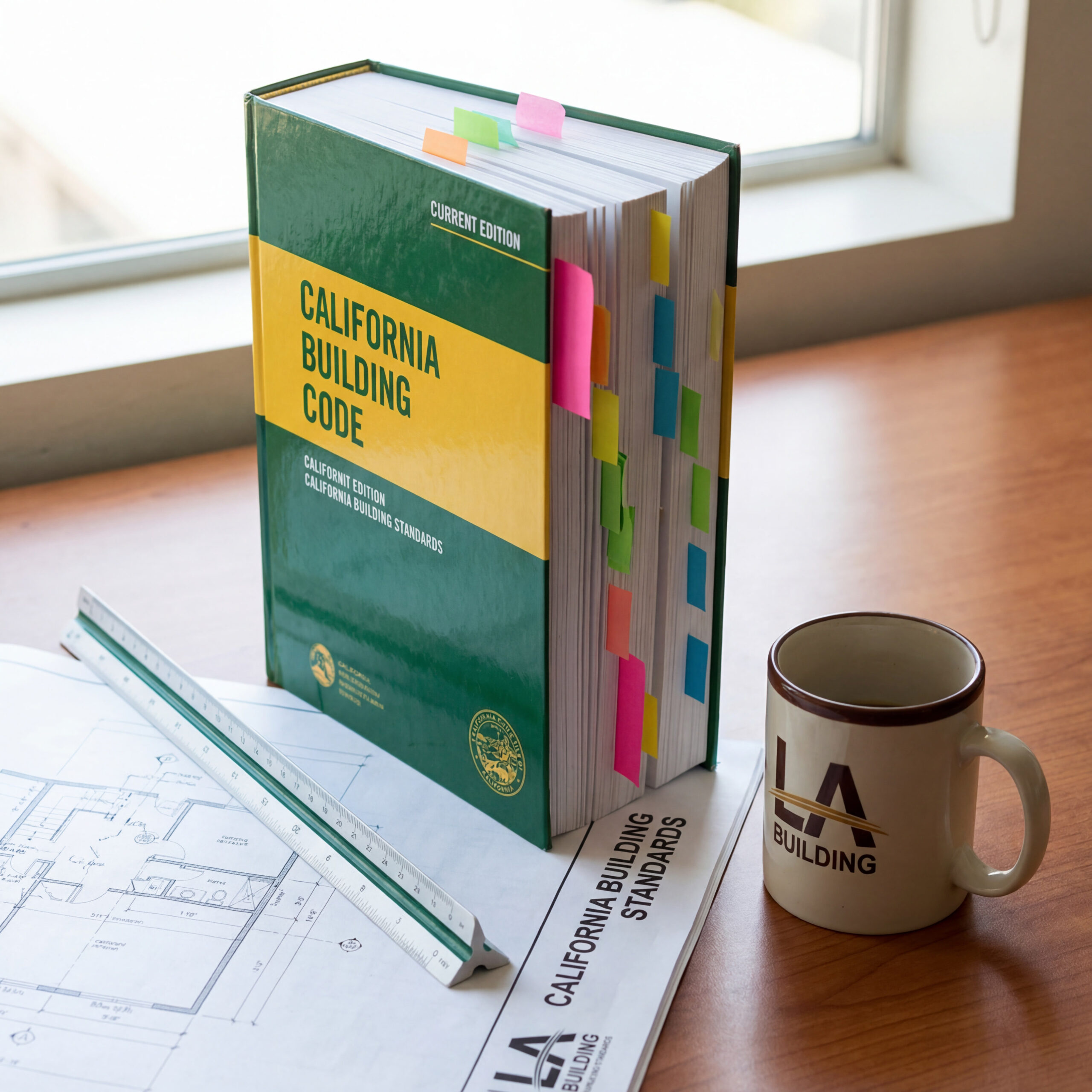
The 2025 California Building Standards Code (Title 24) was officially published on July 1, 2025, and it becomes mandatory statewide on January 1, 2026. This isn’t a small tweak—it’s the triennial overhaul of the entire regulatory framework for building design and construction. It touches everything from structural safety to energy efficiency, fire safety, plumbing, mechanical systems, and green building requirements.
Here’s what matters for landlords.
The Three Areas That Hit Landlords Hardest
Not every code change affects rental properties equally. But these three do—and they’re the ones landlords are most likely to run into when planning work in 2026.
1. Energy Code (Title 24, Part 6) — Expanded Alteration Triggers
This is the one that catches people off guard. The 2025 Energy Code doesn’t just apply to new construction—it expands when compliance upgrades are triggered during renovations and alterations.
What does that mean practically? If you replace an HVAC system, do envelope work (like window or insulation upgrades), or make electrical changes, you may now be required to bring other systems into compliance that weren’t previously triggered.
The code also pushes stricter heat pump readiness and electrification pathways—even in buildings where gas systems are still allowed. And lighting power density requirements for common areas, garages, and exterior lighting have been updated.
The bottom line: routine replacements increasingly require compliance upgrades. What used to be a straightforward HVAC swap might now involve additional electrical work, documentation, and inspection requirements.
2. Building Code (CBC/CRC) — Safety and Repair Standards
Landlords feel the building code through enforcement, not theory. And the 2025 updates affect how repairs get evaluated.
Fire-resistance requirements have been clarified—particularly around assemblies, penetrations, and how repairs are handled. The line between “patching” and “replacement” is less flexible than before, which means some repairs that previously passed muster may now require more extensive work.
There’s also better coordination between the building code and the SB-721/SB-326 balcony inspection requirements. This doesn’t change those laws, but it makes the inspection and repair standards clearer—and inspectors will be looking more closely at how exterior elevated elements are maintained.
If you have a property with balconies, exterior stairs, or walkways, the 2025 code cycle means your repair documentation needs to be tighter than ever.
3. CALGreen (Title 24, Part 11) — The Sleeper Issue
CALGreen is California’s green building standards code, and it’s often overlooked by landlords. That’s a mistake.
The 2025 updates expand mandatory measures for multifamily alterations. If you’re doing significant work on a rental building, you may now need to address water efficiency and fixture replacement thresholds, EV infrastructure requirements when electrical work is performed on parking facilities, and construction waste diversion documentation.
Some cities—including parts of Los Angeles—are elevating CALGreen Tier 1 to mandatory for larger projects. Plan checkers will flag missing CALGreen notes, and inspectors will verify compliance before final approval.
This is where landlords get blindsided. You think you’re doing a routine renovation, and suddenly there’s a CALGreen checklist you didn’t know existed.
What’s Happening in Los Angeles Specifically
California sets the statewide baseline, but local jurisdictions can—and do—add their own amendments. Here’s where LA stands.
LA County (Unincorporated Areas)
The Board of Supervisors has scheduled a November 25, 2025 hearing to formally adopt the 2025 codes with local amendments. The ordinances are set to become operative January 1, 2026.
Key focus areas in the LA County amendments include Fire Hazard Severity Zones and Wildland-Urban Interface requirements. If your property is in a fire zone, expect stricter compliance standards for any permitted work.
LA City (LADBS)
LA City historically adopts the state code with more restrictive local amendments—particularly for seismic safety, fire resistance, and existing building repairs.
While the specific 2025 adoption ordinance hasn’t been published yet, this is consistent with past cycles. The 2019 amendments were effective December 27, 2019; the 2016 amendments were effective December 30, 2016. Expect the same pattern for 2025.
LADBS Information Bulletins and local enforcement policies often change even when the base code doesn’t. Inspectors enforce city policy, not just state text.
The Permit Timing Strategy You Need to Understand
This is the actionable part—and it matters more than most landlords realize.
Submittal date—not permit issuance—determines which code applies to your project.
Projects submitted before January 1, 2026 are generally reviewed under the 2022 code cycle. Projects submitted on or after January 1, 2026 must comply with the 2025 codes.
But here’s the catch: it’s not just about when you submit. It’s about when your application is deemed complete.
If you submit on December 30 but your application is incomplete—missing energy documentation, CALGreen forms, or required signatures—and it doesn’t get deemed complete until January 3, you may be looking at 2025 code compliance.
Industry guidance suggests treating December 15–20 as your practical internal deadline for submitting under the 2022 code. That accounts for completeness checks, staffing shortages, and holiday closures.
This difference can materially affect scope, cost, and required upgrades—especially for renovations.
What This Means for Inspections
Even though these code changes deal with permits and construction, they connect directly to the inspection work I do every day.
If you’re planning work in 2026, a pre-renovation inspection can help you understand what’s currently there—and what might trigger compliance upgrades under the new code. The difference between “replace in kind” and “must upgrade” often depends on existing conditions that aren’t obvious until someone looks.
If you have balconies, walkways, or exterior stairs, the tighter coordination between building code and SB-721/SB-326 means inspection and repair documentation matters more than ever. Inspectors will be looking at how repairs are done, not just whether they were done.
If you’re in unincorporated LA County, RHHP compliance inspections aren’t going anywhere. The code changes don’t reduce habitability enforcement—if anything, they may intensify it as departments focus less on new regulations and more on existing compliance.
What You Should Do Now
If you’re planning work for early 2026: Decide now whether you want to submit under the 2022 code or plan for 2025 compliance. If you want the older standards, your practical deadline is mid-December 2025—and your application needs to be complete, not just submitted.
If you’re doing significant renovations: Talk to your architect or contractor about what triggers compliance upgrades under the new Energy Code and CALGreen. You don’t want to be surprised by additional requirements mid-project.
If you have multifamily properties: Pay attention to the CALGreen changes. Mandatory measures for alterations are expanding, and plan checkers will enforce them.
If you’re unsure where your property stands: A preparation inspection can identify existing conditions that affect your options—before you’re locked into a code cycle.
Final Thoughts
California’s triennial code cycle isn’t news to anyone who works in construction. But for landlords who don’t follow building codes closely, January 1, 2026 can sneak up on you.
The 2025 Title 24 updates raise the bar for energy efficiency, fire safety, and green building compliance. They expand when alterations trigger upgrades. And they tighten the standards that inspectors use to evaluate repairs.
None of this changes the fundamentals, though. Your property still needs to meet code. Your rental units still need to be habitable. Your balconies and walkways still need to be safe. Inspections still matter.
What’s changed is the regulatory environment around all of that—and for most property owners, understanding the transition is the first step toward staying ahead of it.
If you have questions about how any of this affects your specific situation, or if you need help understanding what your property might trigger under the new code, I’m happy to talk through it.
Nathan Sewell
LA Building Inspections & Compliance
Certified home inspector with an architecture background, specializing in RHHP compliance, SB-721 balcony inspections, and habitability assessments throughout Los Angeles County.
(626) 214-5929 | nathan@larentalinspections.com
Serving all of Los Angeles County
Get Ahead of Your Inspection
Book an inspection today and get ahead of your inspection. We'll help you get the most out of your inspection.
Schedule InspectionQuestions?
Email: nathan@larentalinspections.com
Call/Text: (626) 214-5929
Serving all of Los Angeles County