
Table of Contents
- Average Commercial Inspection Timelines
- Key Factors That Affect Inspection Duration
- Phase-by-Phase Breakdown of the Inspection Process
- Types of Commercial Inspections and Their Timelines
- Los Angeles-Specific Considerations
- What Happens After the Inspection?
- How to Speed Up the Commercial Inspection Process
- How to Choose the Right Commercial Inspector in Los Angeles
- Frequently Asked Questions
- Final Thoughts
If you’re buying, selling, or investing in commercial real estate in Los Angeles, one of the first questions you’ll likely ask is: how long is this going to take? It’s a fair question. Time is money in commercial real estate, and the inspection process is one of the most important steps in your due diligence window.
The short answer is that a Commercial Building Inspector Los Angeles can take anywhere from a few hours to several days. The longer answer depends on the type of property, its size, age, and what systems need to be evaluated. Understanding what goes into the timeline helps you plan better, avoid delays, and make the most of your inspection investment.
Average Commercial Inspection Timelines
Not all commercial properties are created equal, and the time required to inspect them reflects that. Here’s a general breakdown of what to expect based on property size.
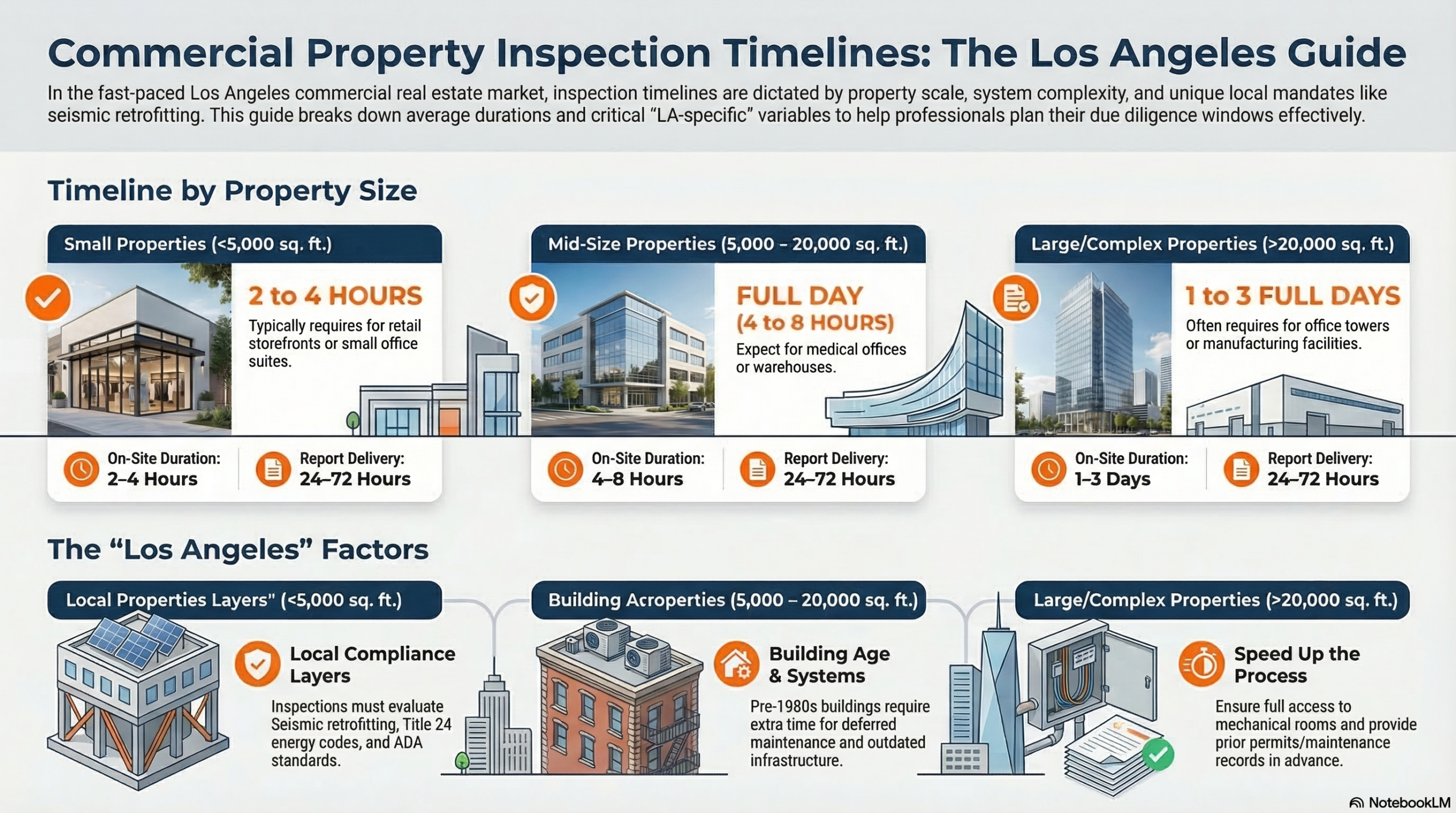
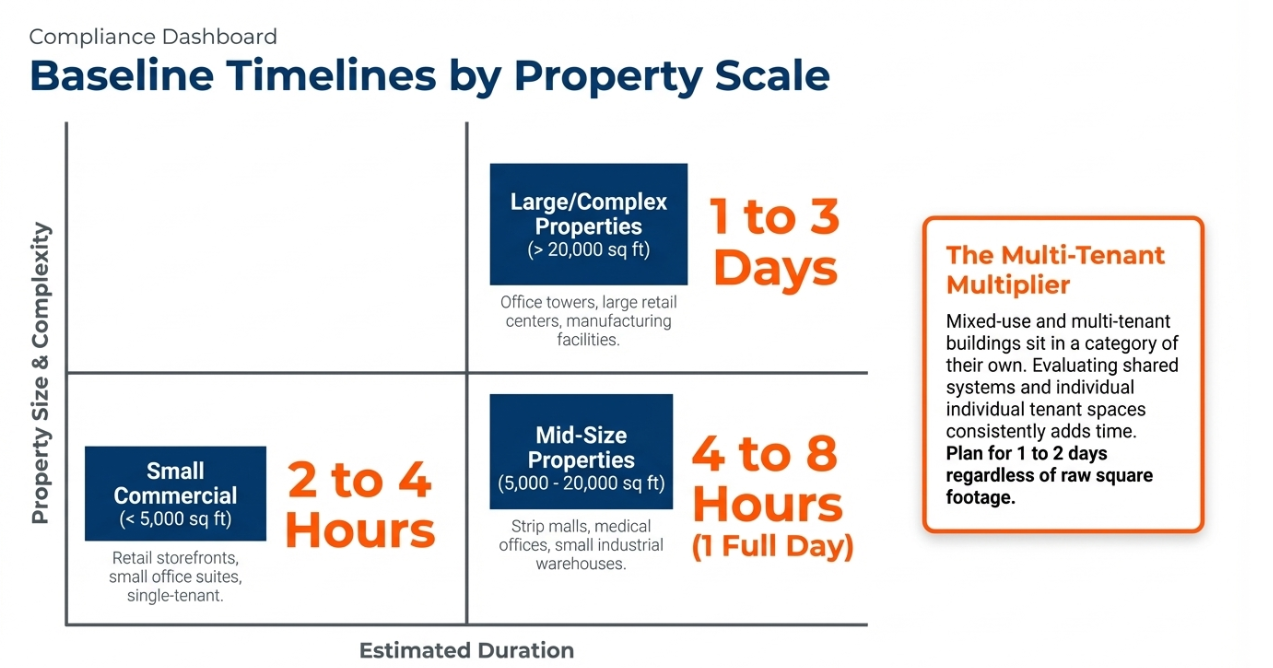
Small commercial properties under 5,000 square feet, such as a retail storefront, small office suite, or single-tenant building, typically take between two and four hours to inspect. These are relatively straightforward jobs where an experienced inspector can move through the space efficiently.
Mid-size properties ranging from 5,000 to 20,000 square feet usually require a full day, somewhere between four and eight hours. Think of a strip mall unit, a medical office building, or a small industrial warehouse. There are more systems to evaluate and more ground to cover.
Large or complex properties over 20,000 square feet can take anywhere from one to three full days. Office towers, large retail centers, manufacturing facilities, and similar properties have multiple floors, mechanical rooms, rooftop equipment, and dozens of individual systems that all need thorough evaluation.
Multi-tenant and mixed-use buildings sit in a category of their own. Even if the total square footage isn’t enormous, inspecting multiple tenant spaces, shared systems, and common areas adds time. Plan for one to two days in most cases.
Key Factors That Affect Inspection Duration
Square footage is the most obvious factor, but it’s far from the only one. Several variables can extend or shorten how long an inspection takes in Los Angeles.
The age and condition of the building plays a big role. Older buildings, especially those built before the 1980s, often have deferred maintenance, outdated systems, and materials like asbestos or knob-and-tube wiring that require additional attention. A newer building in good condition moves faster.
The number and type of systems being inspected matters too. HVAC, electrical panels, plumbing, roofing, fire suppression, elevators, generators, and solar installations each add time. If a property has several of these, especially older or more complex versions, the inspector needs to spend more time on each one.
Accessibility is another practical factor that gets overlooked. If mechanical rooms are locked, rooftop access is restricted, or crawl spaces are blocked, the inspection gets delayed. Having everything accessible and unlocked on inspection day makes a real difference.
In Los Angeles specifically, there are local compliance layers that add to the inspection scope. Seismic retrofitting requirements, Title 24 energy code compliance, ADA accessibility standards, and LADWP-related systems all require attention that inspectors in other markets may not deal with as routinely.
Phase-by-Phase Breakdown of the Inspection Process
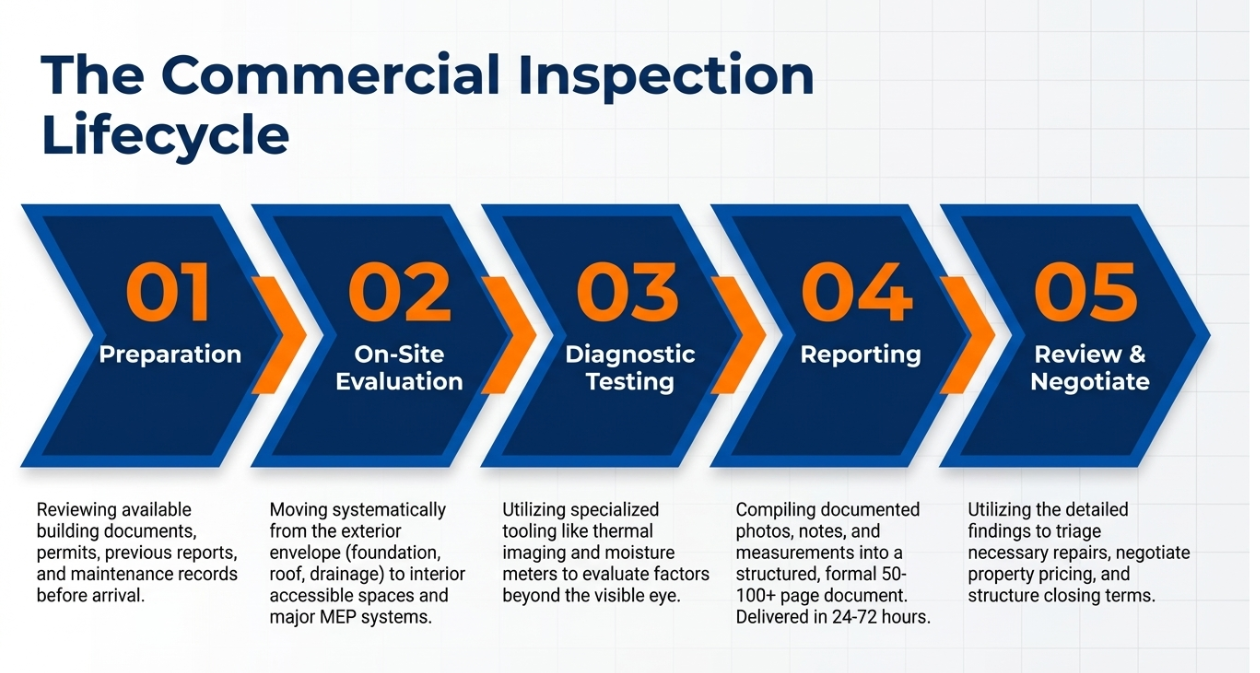
A commercial inspection isn’t just a walkthrough. It happens in stages, and understanding each one helps you set realistic expectations.
Before the inspector ever sets foot on the property, there’s a preparation phase. This involves reviewing available building documents, permits, previous inspection reports, and maintenance records. Good inspectors want to know what they’re walking into. If you can provide these documents in advance, it speeds things up considerably.
The on-site portion is the most time-intensive part. The inspector moves through the exterior first, evaluating the foundation, roof, drainage, parking areas, and building envelope. Then they move inside, checking every accessible space, from tenant areas to utility rooms to the roof. Every major system gets evaluated.
Many commercial inspections also include specialized testing. Thermal imaging can reveal hidden moisture intrusion or electrical hot spots. Air quality testing identifies potential issues with mold or ventilation. Moisture meters and other diagnostic tools give the inspector data beyond what’s visible to the eye.
Throughout the process, the inspector is documenting everything with photos, notes, and measurements. This documentation becomes the foundation for the written report.
After the on-site work is done, the inspector writes the report. For a thorough commercial inspection, expect the report to be delivered within 24 to 72 hours. Some firms offer faster turnaround for an additional fee if your due diligence timeline is tight.
Types of Commercial Inspections and Their Timelines
The purpose of the inspection can also affect how long it takes and what it covers.
A standard pre-purchase inspection is the most comprehensive type. It’s designed to give a buyer a complete picture of the property’s condition before closing. These take the longest because nothing gets skipped.
A pre-listing inspection is similar in scope but conducted by the seller before putting the property on the market. The goal is to identify issues ahead of time so they can be addressed or disclosed upfront.
Tenant improvement inspections focus specifically on the space being built out or modified. These are scoped more narrowly and tend to be faster than a full property inspection.
Annual maintenance inspections are ongoing evaluations that owners use to track building condition over time. Since the inspector often has prior reports to reference, these can sometimes move a bit faster.
A Phase I Environmental Site Assessment is a separate process from a standard commercial inspection. It’s conducted by environmental professionals and can take one to three weeks from start to final report, depending on research required and lab results.
Los Angeles-Specific Considerations
Inspecting a commercial building in Los Angeles isn’t the same as inspecting one in Phoenix or Dallas. The city has its own set of codes, requirements, and building characteristics that directly affect the inspection process.
Seismic safety is a major factor. Los Angeles has a substantial inventory of soft-story buildings and non-ductile concrete structures that are particularly vulnerable in earthquakes. Evaluating whether a property has been retrofitted, or whether it’s subject to mandatory retrofit ordinances, is part of a thorough commercial inspection in this market.
Fire code compliance in LA County and the City of Los Angeles is another layer. Requirements around sprinkler systems, egress paths, fire-rated assemblies, and alarm systems are enforced strictly, and inspectors need to evaluate whether existing conditions meet current standards.
Energy efficiency under California’s Title 24 standards affects commercial buildings significantly. Older buildings that haven’t been updated may have deficiencies in insulation, lighting, HVAC controls, or other systems that a thorough inspection will flag.
Neighborhoods like Downtown LA, Hollywood, Mid-Wilshire, and Koreatown have a lot of older building stock that comes with its own set of inspection considerations. Buildings from the 1920s through the 1960s often have infrastructure that’s well past its intended service life and requires careful evaluation.
What Happens After the Inspection?
Once the inspector delivers the report, you’re in the review and decision phase. Most commercial inspection reports are detailed documents, often running 50 to 100 pages or more depending on property size, with photos and descriptions organized by system.
The first step is reading through the findings and separating cosmetic issues from functional deficiencies from safety concerns. Not everything in a report requires immediate action, and a good inspector will help you understand what’s urgent versus what can be monitored over time.
In a purchase transaction, the inspection findings often feed directly into negotiations. A buyer may request that certain repairs be completed before closing, ask for a price reduction to account for deferred maintenance, or request credits to cover future costs. Having a clear report makes those conversations much more concrete.
If repairs are negotiated, a re-inspection may be needed to verify the work was completed properly. Budget time for this in your closing timeline.
How to Speed Up the Commercial Inspection Process
There are things you can do as an owner or buyer to help the inspection move as efficiently as possible.
Gather building documents before the inspection date. Permits, as-built drawings, maintenance records, recent service reports for HVAC or elevators, and prior inspection reports all give the inspector valuable context and reduce time spent on questions that could be answered by paperwork.
Make sure every area of the property is accessible on the day of the inspection. This means mechanical rooms, rooftop access hatches, electrical panels, crawl spaces, and all tenant spaces. Locked doors cause delays and can mean parts of the inspection get missed entirely.
Hiring an inspector with specific experience in Los Angeles commercial properties saves time in the field because they’re already familiar with local systems, codes, and building types. An inspector who has to look things up or isn’t sure how to evaluate a soft-story retrofit will take longer and may miss things.
Finally, schedule the inspection early in your due diligence period. If you wait too long and unexpected issues come up, you won’t have enough time to get specialized follow-up inspections, negotiate repairs, or make a fully informed decision.
How to Choose the Right Commercial Inspector in Los Angeles
The inspector you hire has a direct impact on both the quality and the timeline of the process. A few things to look for:
Credentials matter. Look for inspectors certified through ASHI, InterNACHI, or ICC. These organizations have continuing education requirements and standards of practice that help ensure you’re working with someone who stays current in the field.
Experience with LA commercial properties specifically is more valuable than general commercial inspection experience. Los Angeles has its own code environment, building types, and local regulations. An inspector who works in this market regularly will be more efficient and more thorough.
Ask about their ability to coordinate specialized sub-inspections. For large or complex properties, you may need separate evaluations for structural engineering, electrical systems, environmental conditions, or elevator compliance. An inspector with an established network of specialists can often coordinate these in parallel, saving time overall.
Look at sample reports before you hire. A good commercial inspection report is organized, specific, and includes clear photos. A vague or disorganized report doesn’t give you what you need for negotiations or decision-making.
Frequently Asked Questions
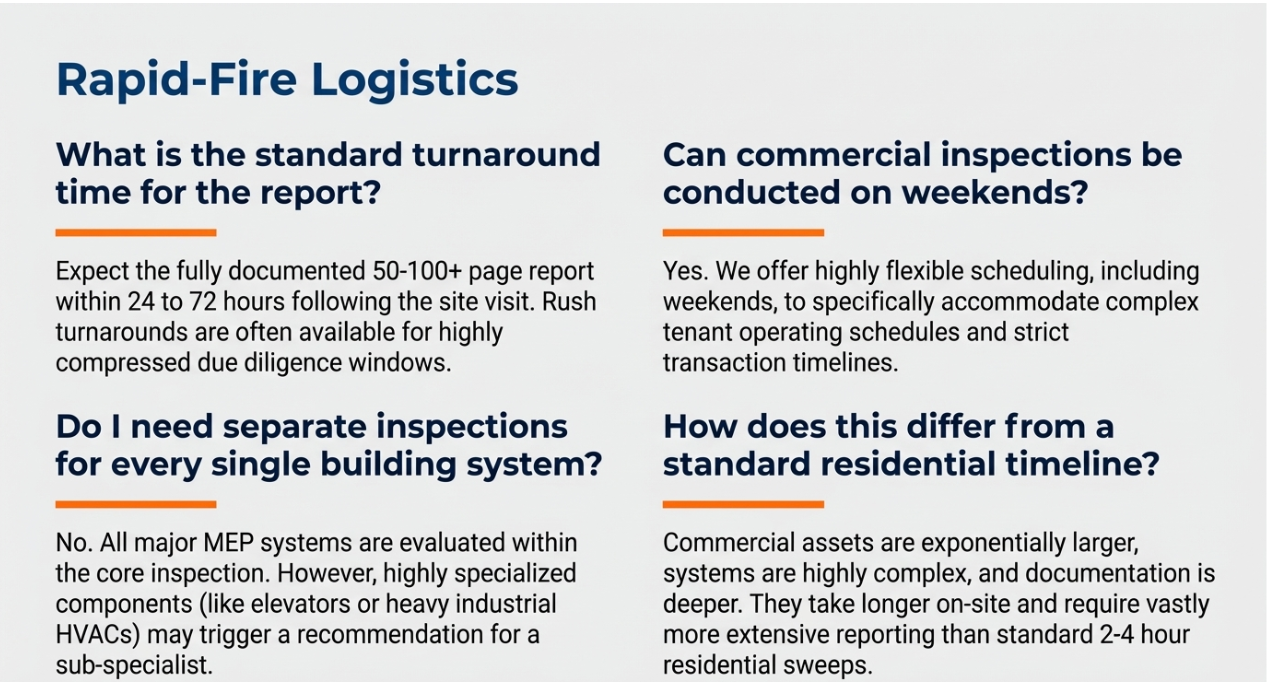
How long does it take to receive the inspection report after the site visit?
Most commercial inspectors deliver reports within 24 to 72 hours. Some offer rush turnaround for an additional fee.
Can commercial inspections be done on weekends in Los Angeles?
Yes, most commercial inspection firms are flexible about scheduling, including weekends, though availability varies. It’s worth asking upfront if your timeline requires a weekend appointment.
Do I need a separate inspection for each building system?
Not necessarily. A qualified commercial inspector evaluates all major systems as part of a single inspection. However, for highly specialized systems like elevators or complex HVAC equipment, a separate specialist evaluation may be recommended in addition to the general inspection.
What’s the difference between a commercial and residential inspection timeline?
Residential inspections typically take two to four hours. Commercial inspections take longer because properties are larger, systems are more complex, and there’s often more documentation involved. The report is also typically more detailed and takes longer to produce.
How far in advance should you book a commercial inspector in Los Angeles?
For properties under 10,000 square feet, one to two weeks of lead time is usually sufficient. For larger or more complex properties, two to four weeks is safer, especially if you’ll need specialized inspections coordinated alongside the general inspection.
Final Thoughts
A commercial inspection in Los Angeles is not something to rush or schedule as an afterthought. It’s one of the most important steps in any commercial real estate transaction, and the timeline can vary significantly depending on property size, age, systems, and local compliance requirements.
Planning for adequate time, hiring an inspector with real Los Angeles experience, and preparing the property and its documents in advance are the most effective ways to make the process go smoothly. The goal isn’t just to get through the inspection quickly — it’s to come out of it with the information you need to make a confident decision.
If you’re ready to schedule a commercial inspection or want to understand what’s involved for your specific property, reach out for a proposal. We’ll walk you through what to expect and make sure your timeline works.
Get Ahead of Your Inspection
Book an inspection today and get ahead of your inspection. We'll help you get the most out of your inspection.
Schedule InspectionQuestions?
Email: nathan@larentalinspections.com
Call/Text: (626) 214-5929
Serving all of Los Angeles County