Table of Contents
- What Is a City Building Inspector in Los Angeles?
- What Is a Private Building Inspector in Los Angeles?
- Key Differences: City Inspector vs. Private Inspector
- When You Need the City Inspector and Cannot Skip Them
- When You Should Hire a Private Inspector, Even If the City Also Comes
- Can You Have Both? Yes, and Here Is Why You Should
- Los Angeles-Specific Considerations
- How to Find a Qualified Private Building Inspector in Los Angeles
- Cost Breakdown: What to Expect in Los Angeles
- Frequently Asked Questions
- The Bottom Line
Do You Need a Building Inspector or the City?
Los Angeles Explained
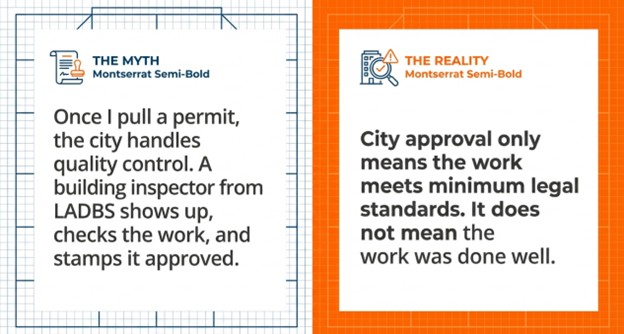
Most homeowners and contractors in Los Angeles assume that once they pull a permit, the city takes care of everything. A building inspector from LADBS shows up, checks the work, and stamps it approved. That is the plan, anyway.
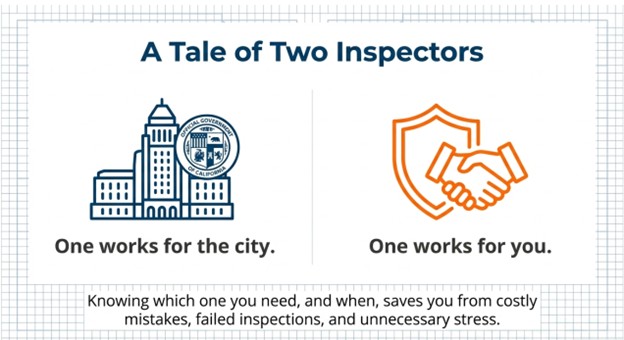
What many people do not realize is that there are actually two very different types of building inspectors, and they serve completely different purposes. One works for the city. The other works for you. Knowing which one you need, and when, can save you from costly mistakes, failed inspections, and a lot of unnecessary stress.
This guide breaks down the difference between city inspectors and private building inspectors in Los Angeles, explains when you legally need one versus when it is simply in your best interest to hire one, and helps you figure out the right move for your specific situation.
Not sure which type of inspector you need? Speak With an Inspector to get a straight answer before your project moves forward.
What Is a City Building Inspector in Los Angeles?
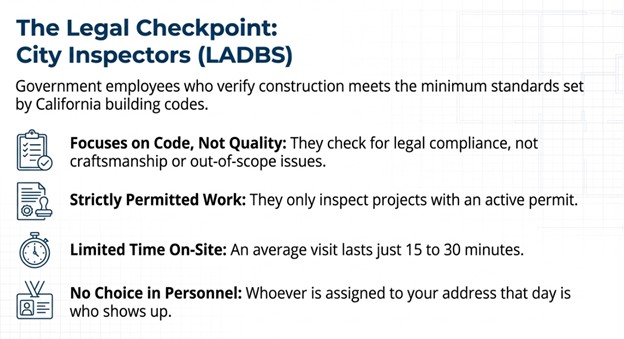
A city building inspector in Los Angeles is a government employee who works for the Los Angeles Department of Building and Safety, commonly known as LADBS. Their job is to verify that construction work meets the minimum standards set by California building codes and local ordinances.
They do not work for you. They work for the city. That distinction matters more than most people think.
When city inspectors get involved
City inspectors only enter the picture once a permit has been issued. There is no city inspection for unpermitted work, and they do not come out to assess a property before you buy it or just because you have a question about construction quality. A permit is required first.
What they typically inspect
- Structural framing once the skeleton of the build is in place
- Electrical rough-in before the walls are closed up
- Plumbing rough-in at the appropriate stage of the project
- Insulation installation before drywall goes up
- Final inspection when the project is complete
The real limitations of city inspections
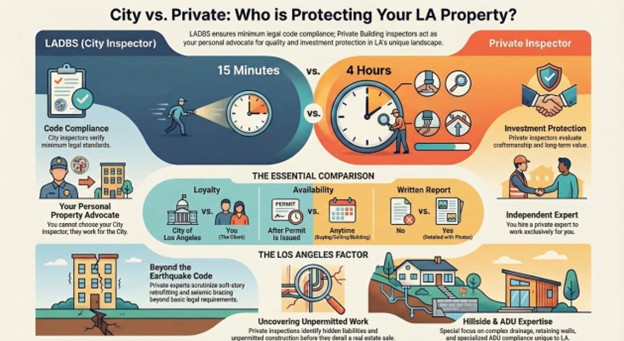
City inspectors are thorough professionals, but the structure they work within limits what they can do for you personally. On a busy day, an inspector might spend fifteen to thirty minutes at your property. They are checking for code compliance, not for quality, not for craftsmanship, and not for issues that fall outside the specific scope of the permit.
They are also not someone you can choose. Whoever is assigned to your address on that day is who shows up. If you have a follow-up question, you may or may not get the same person back.
Perhaps most importantly, their approval means the work meets minimum legal standards. It does not mean the work was done well.
What Is a Private Building Inspector in Los Angeles?
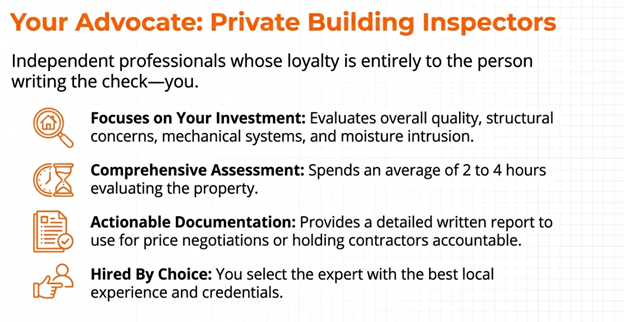
A private building inspector is an independent professional you hire directly to evaluate construction work on your behalf. They are not affiliated with LADBS, and their loyalty is entirely to the person writing the check, which in this case is you.
Credentials to look for
In California, a reputable private building inspector will typically hold an ICC certification, which stands for the International Code Council. Many also have backgrounds as contractors or engineers, which gives them practical experience beyond what is strictly required for inspections. Look for someone with specific familiarity with Los Angeles building practices, because local rules and quirks matter here more than in most places.
When you would hire a private inspector
- Before purchasing a home, to understand exactly what you are buying
- During a renovation or addition, to get a second set of eyes beyond the city inspection
- After new construction, when you want confirmation that quality matched the contract
- When you suspect unpermitted work in a home you are considering buying
What they do differently
A private building inspector typically spends two to four hours on a property, not thirty minutes. They are not rushing to their next stop on a city schedule. They will look at structural concerns, mechanical systems, roofing, foundation issues, moisture intrusion, and anything else that could affect the value or safety of the building.
When they are done, they provide a written report. This document is yours to use however you need it, whether that means negotiating a price reduction, requiring repairs before closing, or holding a contractor accountable for substandard work.
Key Differences: City Inspector vs. Private Inspector
Here is a side-by-side look at how the two types of inspectors compare on the issues that matter most.
| Feature | City Inspector (LADBS) | Private Building Inspector |
| Who they work for | City of Los Angeles | You (the client) |
| When they’re involved | After permit is issued | Anytime you request |
| Cost | Included in permit fees | $300-$600+ (varies) |
| Focus | Code compliance only | Your best interest |
| Time on-site | 15-30 min average | 2-4 hours average |
| Written report | No | Yes |
| You choose them | No | Yes |
When You Need the City Inspector and Cannot Skip Them
If your project requires a building permit in Los Angeles, city inspections are not optional. Skipping them or failing to schedule them at the right stages can create serious problems down the road.
Stages that typically require city sign-off
- Foundation, before pouring concrete
- Framing, before any mechanical systems go in
- MEP rough-ins, meaning mechanical, electrical, and plumbing, before walls are closed
- Insulation, before drywall installation
- Final inspection, before occupancy or project closeout
What happens if you skip city inspections
Skipping required inspections does not make them go away. If a city inspector discovers that work proceeded without required sign-offs, you may face a stop-work order, which halts everything until the situation is resolved. In some cases, walls may need to be opened back up so the inspector can see the work that should have been checked earlier.
Beyond the immediate construction headaches, unpermitted work that bypassed required inspections becomes a significant problem when you go to sell the property. Title companies, buyers, and their lenders will often flag it, and resolving it retroactively can be expensive and time-consuming.
When You Should Hire a Private Inspector, Even If the City Also Comes
The city inspector and a private inspector serve different purposes, which means there are many situations where you would benefit from hiring a private inspector even when city inspections are already part of the process.
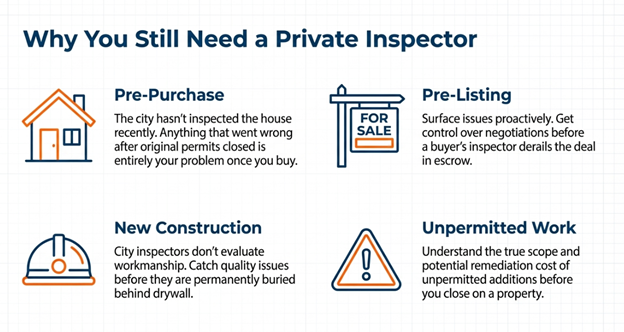
- When buying a home in Los Angeles, a private inspection is one of the most important steps in due diligence. The city has not inspected that house recently, and anything that went wrong after the original permits were closed is entirely your problem once you take ownership.
- When selling, a pre-listing inspection can surface issues before they derail a deal. Addressing problems proactively gives you more control over the negotiation than learning about them from a buyer’s inspector during escrow.
- During new construction, city inspectors check for code compliance at specific stages but do not evaluate overall workmanship. A private inspector who follows the project closely can catch quality issues before they are buried behind drywall.
- For ADU projects, which have exploded in Los Angeles over the past several years, both the permit process and the inspection requirements can be complex. Having someone in your corner who knows the ADU-specific requirements in LA is genuinely valuable.
- Any time you are purchasing a property with suspected unpermitted work, a private inspector can help you understand the scope and potential cost of the issue before you close.
Not sure whether your project warrants hiring a private inspector? Speak With an Inspector and get an honest assessment based on your specific situation.
Can You Have Both? Yes, and Here Is Why You Should
Some people assume that hiring a private inspector means they are somehow duplicating work or suggesting they do not trust the city. That is not how it works. These two types of inspectors perform different functions and are not in competition with each other.
Think of the city inspector as the legal checkpoint. They confirm that your project meets the minimum requirements to receive a final sign-off. Their approval is what you need to officially close out a permit and move forward.
A private inspector is your advocate. They are looking at the same work with different eyes, asking different questions, and reporting directly to you rather than to the city.
A real-world scenario
Consider a kitchen remodel in Los Angeles that involves new electrical circuits, relocated plumbing, and a change to the layout. LADBS will send an inspector to check the electrical rough-in and the plumbing rough-in before walls are closed, and then a final inspector once everything is complete. Each visit is focused and relatively brief.
A private inspector hired by the homeowner might walk the project at the framing stage and again at the finish, documenting concerns about the quality of the tile installation, a gap in the exhaust ventilation, and a cabinet that is not plumb. None of those issues would trigger a city inspection failure, but all of them are problems the homeowner would want to know about before final payment to the contractor.
The two inspections work together. One gets you through the permit process. The other protects your actual investment.
Los Angeles-Specific Considerations
Building in Los Angeles is not like building anywhere else in the country. Several local factors make private building inspections more valuable here than they might be in other markets.
Earthquake requirements
California’s seismic standards are strict, and Los Angeles sits directly on some of the most active fault lines in the state. Soft-story retrofitting requirements, anchor bolting, cripple wall bracing, and the specific structural demands that come with hillside construction are all areas where quality of execution matters as much as code compliance. A private inspector with seismic experience can evaluate whether the work that passed city inspection was done in a way that will actually perform under stress.
LADBS scheduling and backlog
LADBS handles a significant volume of inspections across a massive city. Scheduling delays are common, particularly for busy project types. Understanding how to navigate the inspection scheduling process, and what to do when a required inspection cannot be scheduled before the next construction phase needs to begin, is something a knowledgeable private inspector can help you manage.
Hillside properties
A substantial portion of Los Angeles is built on hillsides with challenging topography, expansive soils, and specific grading and drainage requirements. Hillside properties add layers of complexity to any construction project, and the inspection requirements reflect that. Drainage details, retaining walls, and foundation systems in hillside locations deserve extra scrutiny.
Historic districts
Neighborhoods like Hancock Park, Angelino Heights, and portions of Los Feliz come with additional requirements related to historic preservation. Work in these areas must meet standards beyond the standard building code, and violations can require expensive corrective work. If you are buying or renovating in a historic district, understanding the full scope of applicable requirements before you start is critical.
The ADU boom
Los Angeles has seen an extraordinary surge in accessory dwelling unit construction over the past several years, driven in large part by state and local policy changes designed to address the housing shortage. ADU projects come with their own permit requirements, inspection stages, and common construction pitfalls. Private inspectors who specialize in or have significant experience with ADU construction in Los Angeles can add real value on these projects.
How to Find a Qualified Private Building Inspector in Los Angeles
Finding a good private building inspector takes a little more than a quick online search. Here is what to look for and what to avoid.
Credentials and experience
Look for an inspector who holds an ICC certification and has substantial experience working specifically in Los Angeles. California has its own code amendments and local requirements that do not necessarily appear in national certifications, so local experience is genuinely meaningful, not just a nice-to-have.
Background matters too. Inspectors who have worked as licensed contractors or in structural engineering bring a depth of practical knowledge that strictly certified inspectors may not have. When something looks off to an experienced eye, they know how to identify the root cause, not just the symptom.
Questions to ask before hiring
- How many years have you been inspecting properties in Los Angeles specifically?
- Are you ICC certified, and do you carry any additional California-specific credentials?
- What does your written report include, and can I see a sample?
- Do you have experience with the specific type of project I am having inspected?
- How soon can you be available, and how long does a typical inspection take?
Red flags to avoid
- Inspectors who offer unusually low prices and rush through properties quickly
- Anyone who discourages you from being present during the inspection
- Inspectors who cannot provide a sample report or who deliver only verbal summaries
- Anyone who is not willing to clearly explain their findings in plain language
What a good inspection report should include
A quality inspection report should be detailed, clearly organized, and written in language that a non-specialist can understand. It should include photographs of any issues found, clear descriptions of the concern and its severity, recommendations for next steps, and a summary that helps you prioritize what needs attention immediately versus what can be monitored over time.
Skip the search and the guesswork. Speak With an Inspector who knows Los Angeles construction inside and out.
Cost Breakdown: What to Expect in Los Angeles
City inspection fees
City inspection fees in Los Angeles are bundled into the permit cost and are not paid separately. The total permit fee depends on the valuation of the project and its type. You do not pay per inspection visit, though a re-inspection fee may apply if work fails and requires a follow-up visit.
Private inspection fees
Private inspection costs in the Los Angeles market vary based on the type and scope of inspection. As a general range, you can expect to pay somewhere between $400 and $700 for a standard general home inspection on a single-family residence. New construction phase inspections, where an inspector visits at multiple stages of a project, typically run between $250 and $500 per visit. Specialized inspections focused on a specific system, such as the foundation, roof, or electrical panel, will be priced separately and can vary significantly based on the complexity involved.
Is it worth the cost?
The most common version of this question goes something like this: why would I pay $500 for an inspection on a house I might not even buy? The more useful way to think about it is this: a $500 inspection that uncovers a foundation issue, a failing roof, or extensive unpermitted work just saved you from a decision that could cost tens of thousands of dollars to unwind. The cost of an inspection is almost always negligible relative to the value of the decision you are making.
On the construction side, catching a substandard framing job or improper waterproofing before the walls go up is far less expensive than discovering the same problem after the fact. Remediation costs almost always dwarf the cost of prevention.
Frequently Asked Questions
Do I need a permit for every project in Los Angeles?
No. Routine maintenance and small cosmetic work typically do not require permits. However, anything that involves structural changes, new electrical circuits, plumbing modifications, HVAC work, or changes to the footprint of a structure will almost certainly require one. When in doubt, the LADBS website has guidance, or you can call the department directly. Unpermitted work that should have had a permit creates problems for you later, so it is worth getting clarity upfront.
Can I schedule my own city inspection?
Yes. Once a permit is issued, you or your contractor can schedule inspections through the LADBS online portal or by phone. The permit holder is responsible for ensuring inspections are scheduled at the appropriate stages.
What if the city inspector fails my project?
A failed inspection means the work does not yet meet code requirements. The inspector will note what needs to be corrected, and you will need to address those items and schedule a re-inspection. Depending on the issue, a re-inspection fee may apply. A failed inspection is not the end of the world, but repeated failures on the same issues will slow your project down significantly.
Does a private inspector replace the city inspector?
No. The city inspection is a legal requirement for permitted work, and a private inspection does not satisfy that requirement. They serve different purposes and are not interchangeable. A private inspector supplements the city process; they do not replace it.
What is the difference between a home inspector and a building inspector?
These terms are sometimes used interchangeably, but they are not the same thing. A home inspector typically conducts a general assessment of a residential property for a buyer, covering major systems and visible conditions. A building inspector, particularly one with ICC certification or a construction background, may focus more specifically on construction quality, code compliance details, or phase-by-phase assessment of an active project. For a home purchase, a qualified home inspector is often the right starting point. For an active construction project, you generally want someone with hands-on building experience.
The Bottom Line
City inspectors protect the public interest. They make sure construction in Los Angeles meets the minimum standards required by law. That job matters, and their approval is something you genuinely need on any permitted project.
Private building inspectors protect your specific interest. They give you information the city process was never designed to provide, whether that is a detailed account of a home’s condition before you buy it, documentation of quality issues during a renovation, or an independent set of eyes on a new construction project you are paying for.
In a city with active fault lines, hillside construction challenges, a hot real estate market, and a complex permitting environment, having both working on your behalf is not redundant. It is just smart.
Have questions about your specific project or property? Speak With an Inspector and get clear, straightforward guidance from someone who knows Los Angeles construction.
Get Ahead of Your Inspection
Book an inspection today and get ahead of your inspection. We'll help you get the most out of your inspection.
Schedule InspectionQuestions?
Email: nathan@larentalinspections.com
Call/Text: (626) 214-5929
Serving all of Los Angeles County