
Table of Contents
- Why This Matters
- What the Code Actually Requires
- The Basic Requirements
- The Sprinkler Exception
- The Penetration Problem
- Electrical Penetrations
- Pipe and Conduit Penetrations
- HVAC Penetrations
- What I Find in Older Buildings
- Walls That Aren’t Continuous
- Inadequate Drywall
- Accumulated Penetration Damage
- Renovation Damage
- When Renovation Triggers Upgrades
- Level 1 Alterations
- Level 2 Alterations
- Level 3 Alterations
- Change of Occupancy
- What You Should Check
- In Common Areas
- During Unit Turnovers
- Before Major Renovations
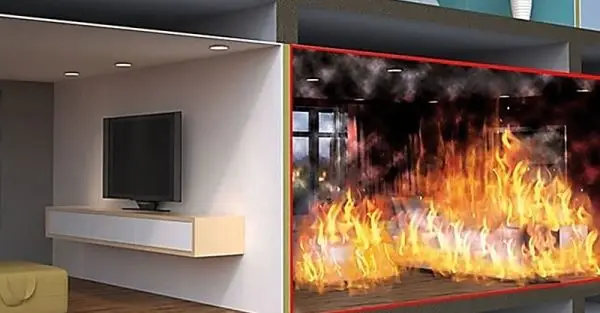
The wall between your tenant’s bedroom and the unit next door isn’t just a wall. It’s supposed to be a fire barrier that gives everyone time to escape if a fire starts in one unit. In theory, if there’s a fire in Unit A, the residents in Unit B shouldn’t even know about it for at least an hour—that’s how long the fire separation is supposed to hold.
In practice, I find compromised fire separations in the majority of older apartment buildings I inspect. Usually it’s penetrations—holes in the wall for pipes, wires, or ducts that were never properly sealed. Sometimes it’s more serious: walls that were never built to the required standard in the first place, or renovations that punched holes through fire-rated assemblies without proper firestopping.
Here’s what you need to understand about fire separation between units.
Why This Matters
Fire doesn’t respect property lines. In a multifamily building, what happens in one unit affects everyone. The fire separation between units serves two purposes:
Time to escape: If a fire starts in the unit next door, the fire-rated wall buys residents time to wake up, realize something’s wrong, and get out. A 1-hour fire-rated wall means the fire shouldn’t penetrate that wall for at least 60 minutes under test conditions.
Limiting damage: Even if no one is home, proper fire separation limits a fire to the unit of origin instead of allowing it to spread through the entire building.
When fire separations are compromised—by unsealed penetrations, improper construction, or past renovations—fire can spread much faster than it should. This is a life safety issue, not just a code technicality.
What the Code Actually Requires
California Building Code requires walls between dwelling units to be built as “fire partitions” with a 1-hour fire-resistance rating. Floor/ceiling assemblies between stacked units also need 1-hour ratings. Here’s what that means in practice:
The Basic Requirements
- Walls between apartments need 1-hour fire-resistance rating
- Floors/ceilings between stacked apartments need 1-hour fire-resistance rating
- The assembly must be continuous from the foundation to the underside of the roof deck or floor above
- All penetrations must be protected with listed firestop systems
- Assemblies must also achieve STC 50 sound rating (that’s a separate requirement, but the same wall)
The Sprinkler Exception
If your building has an automatic sprinkler system installed throughout per NFPA 13, the fire-rating requirement drops to ½-hour for dwelling unit separations. This is a significant cost difference for new construction, but most older LA apartment buildings aren’t sprinklered.
Fire Partitions vs. Fire Barriers
Code distinguishes between “fire partitions” (what separates apartments from each other) and “fire barriers” (what separates residential from commercial space, or encloses exit stairways). Fire barriers have stricter requirements.
The wall between two apartments is a fire partition. The wall between apartments and a ground-floor retail space is a fire barrier with higher requirements.
The Penetration Problem
This is where I find most of the violations. Fire-rated walls are only as good as their weakest point, and that point is usually a hole someone made and didn’t properly seal.
Electrical Penetrations
Electrical boxes: Code limits outlet and switch boxes in fire-rated walls. Each box can’t exceed 16 square inches, the total area of all boxes can’t exceed 100 square inches per 100 square feet of wall, and boxes on opposite sides of the wall must be separated by at least 24 inches horizontally.
Back-to-back boxes are one of the most common violations I find. Someone installs an outlet in Unit A, then puts the corresponding outlet in Unit B directly on the other side of the same stud bay. That creates a fire pathway—the drywall on each side might be fire-rated, but there’s only a few inches of air between the backs of those boxes.
The fix: Boxes on opposite sides need to be offset by at least 24 inches. Alternatively, listed putty pads installed behind the boxes can restore the fire rating.
Pipe and Conduit Penetrations
Every pipe, wire, or conduit that passes through a fire-rated wall needs to be firestopped. This isn’t just caulk—it’s a listed firestop system appropriate for that specific penetration type.
I constantly find:
- Plumbing pipes with gaps around them
- Electrical conduit sealed with regular caulk instead of fire-rated sealant
- Cable TV and data lines punched through with no sealing at all
- HVAC ducts without fire dampers where they pass through the assembly
HVAC Penetrations
Ducts that pass through fire-rated assemblies typically need fire dampers—devices that automatically close when they sense heat, preventing the duct from becoming a fire highway through the building. Missing dampers or dampers that have been painted over and can’t close are common problems.
The Cable Guy Problem
One of the most common penetration violations comes from utility installations. The cable company drills through to run coax. The phone company drills through for their lines. Internet gets installed. Each technician drills a hole, runs their wire, and leaves without sealing anything.
Over 30 years, a fire-rated wall can accumulate dozens of unsealed penetrations. Each one compromises the fire rating.
What I Find in Older Buildings
LA has a lot of apartment buildings from the 1950s-1970s. The fire separation requirements were different then—sometimes less stringent, sometimes just enforced differently. Here’s what I commonly find:
Walls That Aren’t Continuous
Fire partitions are supposed to extend from the foundation to the underside of the roof deck. In older buildings, I sometimes find walls that stop at the ceiling, with open attic space above that’s shared between units. Fire in one unit could easily spread through the attic to the next unit.
Inadequate Drywall
A 1-hour fire-rated wall typically requires two layers of ⅝-inch Type X gypsum board, or specific tested assemblies. Older buildings might have single-layer walls that don’t meet current standards.
Accumulated Penetration Damage
Decades of maintenance, upgrades, and tenant modifications leave their mark. Every time someone added a phone jack, ran cable, installed a new thermostat, or modified plumbing, they potentially compromised the fire separation.
Renovation Damage
Kitchen and bathroom renovations often involve work on the common wall. Contractors who don’t understand fire-rating requirements may remove existing fire-rated assemblies and replace them with standard construction.
When Renovation Triggers Upgrades
The California Existing Building Code allows older buildings to maintain their original construction unless certain thresholds are crossed. Here’s when you might need to upgrade fire separations:
Level 1 Alterations
Cosmetic work like painting, flooring, or fixture replacement doesn’t typically trigger fire separation upgrades. You’re allowed to maintain what’s there.
Level 2 Alterations
Reconfiguring spaces, adding or removing doors/windows, or changing egress components requires fire separation in new work areas. If you’re renovating Unit A, the new walls need to meet current code.
Level 3 Alterations
Work affecting more than 50% of the building area triggers more comprehensive requirements, potentially including fire separation upgrades throughout the affected areas.
Change of Occupancy
Converting a building to a different use (like turning offices into apartments) triggers current code requirements for fire separation.
What You Should Check
In Common Areas
- Look for unsealed penetrations around pipes and conduits in utility closets
- Check that HVAC ducts have fire dampers where they pass through rated walls
- Verify that walls extend full height and aren’t stopped at the ceiling with open space above
During Unit Turnovers
- Look behind furniture and in closets for unsealed penetrations
- Check around electrical outlets on walls shared with other units
- Look for signs of previous renovations that may have compromised fire separations
Before Major Renovations
- Understand what fire rating the existing walls should have
- Make sure contractors understand firestopping requirements
- Inspect firestopping before walls are closed up
The Inspection Connection
RHHP and SCEP inspections don’t typically include detailed fire separation evaluation—inspectors can’t see what’s inside the walls. But if there are obvious issues like missing firestopping at visible penetrations, that can be cited.
A comprehensive property inspection that looks specifically at fire and life safety can identify problems that routine habitability inspections miss.
Get Ahead of Your Inspection
Book an inspection today and get ahead of your inspection. We'll help you get the most out of your inspection.
Schedule InspectionQuestions?
Email: nathan@larentalinspections.com
Call/Text: (626) 214-5929
Serving all of Los Angeles County