
Table of Contents
- In This Article
- Your Preparation Timeline
- Step 1: Assess Your Property’s Current State
- Know What You’re Working With
- Step 2: Fix the “Big 5” First
- The Violations That Matter Most
- 1. Smoke Detectors
- 2. Carbon Monoxide Detectors
- 3. GFCI Outlets
- 4. Plumbing Leaks
- 5. Window and Door Security
- Step 3: Walk Through Every Unit Systematically
- The Room-by-Room Check
- Kitchen
- Bathroom(s)
- Bedrooms
- Living Areas
- Water Heater
- Exterior/Common Areas
- Step 4: Prepare for Inspection Day
- Set Yourself Up for Success
- Tenant Communication
- Access Preparation
- Documentation to Have Ready
- Step 5: During the Inspection
- What to Expect
- Do:
- Don’t:
- What Happens Next
- If Violations Are Found
- The Preparation Inspection Advantage
- Pass Your Inspection the First Time
- Questions?
Nathan Sewell January 2025 10 min read
In This Article
- Your Preparation Timeline
- Step 1: Assess Your Property
- Step 2: Fix the Big 5
- Step 3: Walk Through Every Unit
- Step 4: Prepare for Inspection Day
- Step 5: During the Inspection
- If Violations Are Found
You got the notice. Your RHHP or SCEP inspection is coming. Now what?
The landlords who pass on the first try aren’t lucky—they’re prepared. They’ve walked through their properties with the same eyes an inspector uses, fixed issues beforehand, and eliminated surprises.
This guide walks you through exactly how to prepare, what to prioritize, and how to handle inspection day. Follow this process and you’ll walk into your inspection confident that your property is ready.
Your Preparation Timeline
How much time do you have? Here’s what to prioritize based on your timeline:
2+ Weeks Out
Ideal Situation
Full preparation possible. Schedule a professional pre-inspection, get contractor work scheduled, address everything systematically.
1 Week Out
Tight But Doable
Focus on the “Big 5” violations (below). DIY what you can, hire help for critical items only. Walk every unit yourself.
2-3 Days Out
Emergency Mode
Smoke/CO detectors, GFCI outlets, obvious plumbing leaks. These are the fastest fixes with highest impact.
Day Before
Final Check
Test everything you fixed. Communicate with tenants about access. Ensure all areas are accessible.
The Best Time to Prepare
The best time to prepare for an RHHP inspection is before you get the notice. If you know your property is in unincorporated LA County, proactive preparation saves stress and money. Don’t wait for the letter.
Step 1: Assess Your Property’s Current State
Know What You’re Working With
Before you start fixing anything, understand the scope. Walk through every unit and common area with fresh eyes—pretend you’ve never seen the property before.
What to look for:
- Safety devices: Smoke detectors, CO detectors in every required location
- Plumbing: Any drips, leaks, or water stains
- Electrical: Dead outlets, missing covers, exposed wires
- Windows and doors: Open, close, and lock properly?
- General condition: Water damage, mold, pest evidence
Make a written list. This becomes your to-do list for the next steps.
Option: Professional Pre-Inspection
A professional pre-inspection identifies everything an official inspector will find—but on your timeline. You get a detailed report of issues, prioritized by importance, with time to fix them before anything goes on record. This is the most reliable way to ensure first-time passage.
Step 2: Fix the “Big 5” First
The Violations That Matter Most
These five issues account for the majority of RHHP/SCEP violations. If you only have time to address five things, make it these:
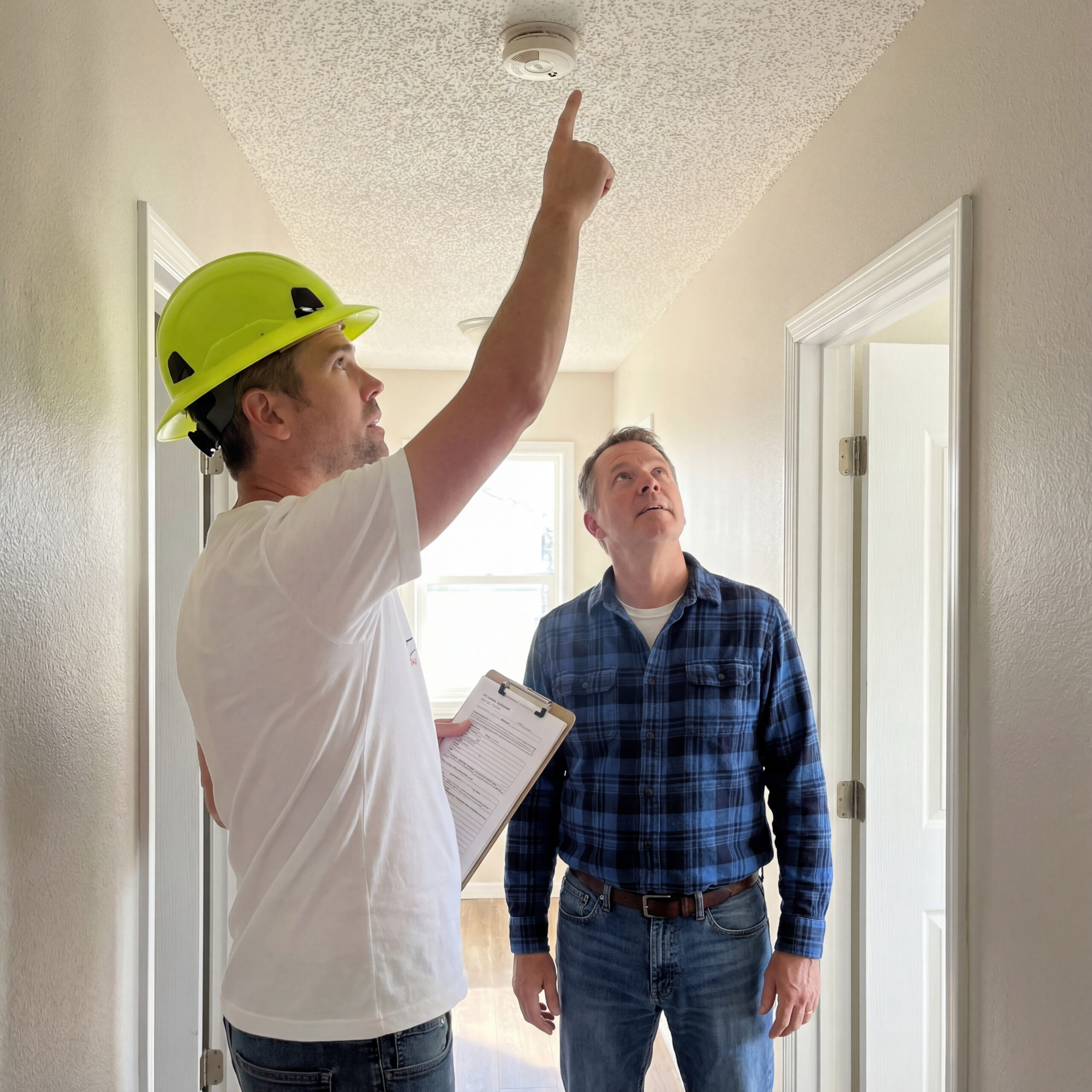
1. Smoke Detectors
Requirement: Working detector in every bedroom, outside each sleeping area, and on every level.
Quick fix: Fresh batteries in all units. Replace any detector over 10 years old (check manufacture date). Add detectors to bedrooms if only in hallways. Total cost: $15-30 per detector.
2. Carbon Monoxide Detectors
Requirement: Working detector outside each sleeping area if property has gas appliances or attached garage.
Quick fix: Install if missing, replace batteries if present, replace if expired (5-7 year lifespan). Total cost: $25-40 per detector.
3. GFCI Outlets
Requirement: GFCI protection in kitchens (near sink), bathrooms, garages, outdoor areas, laundry areas.
Quick fix: Test all GFCIs with test/reset buttons. Replace any that don’t trip or won’t reset. Add GFCIs where missing. Total cost: $15-25 per outlet DIY; $75-150 per outlet for electrician.
4. Plumbing Leaks
Requirement: No active leaks anywhere.
Quick fix: Check under every sink, around every toilet, at water heater. Tighten connections, replace supply lines, fix toilet flappers. Total cost: $10-50 for most DIY repairs.
5. Window and Door Security
Requirement: All windows and doors must open, close, and lock properly. Entry doors need functioning deadbolts.
Quick fix: Test every window and door. Lubricate sticking locks, adjust strike plates, replace broken hardware. Total cost: $20-75 for hardware.
The $200 Rule
Most landlords can address all five of these issues for under $200 and a few hours of work. That’s a tiny investment compared to the consequences of failed inspections and the stress of re-inspections.
Step 3: Walk Through Every Unit Systematically
The Room-by-Room Check
After addressing the Big 5, do a systematic walkthrough of every unit using this process:
Kitchen
- Run water at sink—hot and cold
- Check under sink for leaks
- Test GFCI outlets
- Test all appliances (stove burners, oven, refrigerator)
- Check for pest evidence
Bathroom(s)
- Flush toilet—does it fill and stop?
- Check toilet for stability and base leaks
- Run sink—hot and cold
- Check under sink for leaks
- Run tub/shower—check for leaks at fixtures
- Test GFCI outlets
- Test exhaust fan
- Check for mold/mildew
Bedrooms
- Smoke detector present and tested
- Windows open, close, and lock
- Egress window opens fully (bedroom windows must allow emergency escape)
- Light fixture works
- Outlets work
Living Areas
- Smoke detector (if required by location)
- CO detector outside sleeping areas
- Windows and doors functional
- Entry door locks and deadbolt work
- All outlets and lights work
Water Heater
- Producing hot water
- Seismic straps in place
- T&P valve present with discharge pipe
- No leaks
Exterior/Common Areas
- Handrails secure on stairs
- Guardrails at elevated surfaces
- Exterior lighting works
- Address numbers visible
- Walkways clear and safe
Step 4: Prepare for Inspection Day
Set Yourself Up for Success
Tenant Communication
Give tenants advance notice of the inspection date and approximate time. Remind them:
- Inspector needs access to all rooms
- Clear access to water heater, electrical panel, HVAC
- Pets should be secured
- They don’t need to be present, but access must be available
Access Preparation
- Ensure all units can be accessed (coordinate with tenants for keys/entry)
- Clear path to water heater, electrical panel, crawlspace access
- Remove storage blocking utility areas
- Unlock gates and common area doors
Documentation to Have Ready
- List of units and their addresses
- Your contact information
- Records of recent repairs (helpful but not required)
Step 5: During the Inspection
What to Expect
The inspector’s job is to evaluate, not to help you pass. They’re professional and courteous, but they’re documenting what they find—good and bad.
Do:
- Be present or have a representative present
- Be cooperative and provide access
- Answer questions honestly
- Take notes on anything the inspector points out
- Ask questions if you don’t understand something
Don’t:
- Try to distract or rush the inspector
- Argue about findings during the inspection
- Make excuses or promises to fix things “later”
- Block access to any area
What Happens Next
After the inspection, you’ll receive a written report. If there are no violations—congratulations, you passed. If there are violations, you’ll have 21 days to correct them (with option to request 30-day extension).
If Violations Are Found
Don’t panic. Most violations are easily corrected. Here’s your process:
- Read the report carefully. Understand exactly what was cited and where.
- Prioritize by difficulty. Handle easy fixes first, schedule contractors for harder ones.
- Document your corrections. Photos with dates, receipts, contractor invoices.
- Request extension if needed. If you can’t complete everything in 21 days, request the 30-day extension before the deadline.
- Schedule re-inspection. Once corrections are complete, the inspector returns to verify.
The Real Danger
Violations themselves aren’t the problem—it’s not correcting them. Landlords who address violations promptly move on. Landlords who ignore them face escalating consequences: fines, rent escrow (REAP), and legal exposure.
The Preparation Inspection Advantage
Everything in this guide is easier with professional help. A preparation inspection:
- Identifies issues using the same standards as official inspectors
- Provides a prioritized list of what needs attention
- Gives you time to fix things on your schedule
- Keeps issues off the official record
- Reduces stress and uncertainty
The landlords I work with who do preparation inspections consistently pass their official RHHP inspections with zero or minimal violations. They walk in confident because they already know their property is ready.
If your inspection is coming up—or if you want to get ahead of it—give me a call. I’ll tell you exactly what an inspector will find, and you’ll have time to address it properly.
NS
Nathan Sewell
LA Building Inspections & Compliance
Certified home inspector specializing in RHHP preparation, habitability assessments, and rental property inspections throughout Los Angeles County.
Pass Your Inspection the First Time
A preparation inspection finds what officials will find—but on your timeline. No surprises, no scrambling.
Questions?
Call/Text: (626) 214-5929
Email: nathan@larentalinspections.com
Serving all of Los Angeles County
LA Building Inspections & Compliance
(626) 214-5929 nathan@larentalinspections.com labuildingcompliance.com
© 2025 LA Building Inspections & Compliance. All rights reserved.
Get Ahead of Your Inspection
Book an inspection today and get ahead of your inspection. We'll help you get the most out of your inspection.
Schedule InspectionQuestions?
Email: nathan@larentalinspections.com
Call/Text: (626) 214-5929
Serving all of Los Angeles County