

Los Angeles is one of the most competitive real estate markets in the country. When you find the right home, the pressure to move fast is real — but skipping a pre-purchase inspection to speed things along could be one of the most expensive decisions you ever make. Behind that fresh coat of paint or those gorgeous hardwood floors could be a failing foundation, outdated wiring, or seismic vulnerabilities that cost tens of thousands of dollars to fix.
This guide gives LA homebuyers a complete pre-purchase inspection checklist — so you know exactly what gets examined, what red flags to watch for, and how to use your inspection results to buy with confidence.
Buying soon? Book your Pre-Purchase Inspection in LA today.
Why Pre-Purchase Inspections Are Essential in Los Angeles

The Age of LA’s Housing Stock
Unlike newer suburban markets, Los Angeles is full of character homes — Craftsman bungalows, Spanish Colonials, Mid-Century Moderns — many of which are 50 to over 100 years old. While beautiful, older homes come with older systems: aging pipes, outdated electrical panels, and foundations that were built before modern seismic codes existed. A thorough inspection is the only reliable way to know what you’re actually buying.
Earthquake and Seismic Risk
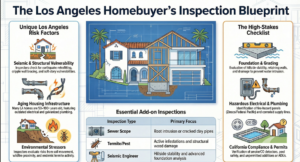
Los Angeles sits on one of the most seismically active regions in the world. Home inspectors in LA are specifically trained to identify soft-story structures, cripple wall vulnerabilities, and homes that lack proper earthquake retrofitting. These aren’t minor details — they’re life-safety issues that can also affect your insurance premiums and the home’s insurability altogether.
Southern California’s Unique Environmental Challenges

LA buyers face a set of environmental risk factors that simply don’t exist in most other markets:
- Drought and soil movement can cause foundation shifting and cracking over time.
- Hillside construction introduces drainage, retaining wall, and slope stability concerns.
- Wildfire proximity affects roofing material requirements and defensible space.
- Termites and wood-destroying pests are endemic to Southern California’s climate and can silently compromise structural integrity.
The Financial and Legal Risk of Skipping an Inspection
In California, sellers are required to disclose known defects — but they can only disclose what they know. An uninspected home leaves you exposed to costly surprises after close of escrow, with little to no legal recourse. A pre-purchase inspection gives you documented evidence of a home’s condition before you’re legally bound to it.
What a Pre-Purchase Inspection Covers: The Full Checklist
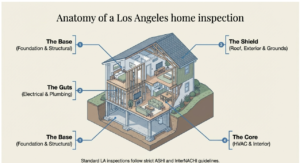
A standard home inspection in Los Angeles follows guidelines set by professional bodies like ASHI and InterNACHI, covering all major systems and structural components of the home. Here’s what to expect, section by section.
- Structural & Foundation
The foundation is where everything starts — and in LA, it deserves extra scrutiny.
- Foundation type: Is the home on a slab, raised foundation, or hillside/post-and-pier system? Each carries different risk profiles.
- Cracks and settling: Hairline cracks may be cosmetic; horizontal or stair-step cracks in block foundations can signal serious structural movement.
- Earthquake retrofitting status: Has the home been bolted to its foundation? Are cripple walls braced? This can significantly affect insurability.
- Retaining walls: Common in hillside properties — inspectors check for lean, cracking, and drainage issues behind the wall.
- Roof
LA’s sun-drenched climate is tough on roofing materials, and roof replacement is one of the most significant repair costs a buyer can inherit.
- Age and material condition: Inspectors assess remaining useful life of shingles, tile, or flat roof membranes.
- Gutters and drainage: Clogged or improperly pitched gutters can cause fascia rot and foundation water intrusion.
- Skylights: Common in LA homes — checked for sealing, cracking, and signs of past leaks.
- Evidence of repairs: Patched areas or mismatched materials may indicate ongoing or recurring problems.
- Electrical System
Electrical issues are among the most common findings in older LA homes — and among the most potentially dangerous.
- Panel age and capacity: Federal Pacific and Zinsco panels, common in homes built through the 1980s, are known fire hazards and flagged for replacement.
- GFCI outlets: Required by code in kitchens, bathrooms, garages, and outdoor areas — inspectors verify presence and function.
- Wiring condition: Knob-and-tube wiring (pre-1950s) and aluminum wiring (1960s–70s) are both flagged as safety concerns that may require upgrading.
- Grounding and panel labeling: Improperly labeled or ungrounded circuits are common in older homes.
- Plumbing
Water damage is one of the leading causes of costly home repairs. Inspectors trace LA’s often-aging plumbing from supply lines to drains.
- Pipe materials: Galvanized steel pipes corrode over time and reduce water pressure. Copper is preferred; PEX is modern and flexible.
- Water pressure: Tested at multiple fixtures to identify flow restrictions or pressure regulator issues.
- Water heater: Age, condition, and — critically in California — seismic strapping. An unstrapped water heater is a code violation and a safety hazard.
- Sewer line condition: While not always part of a standard inspection, sewer scope add-ons are highly recommended (more on this below).
- HVAC Systems
With LA’s hot summers and cool canyon nights, a reliable HVAC system isn’t a luxury — it’s a necessity.
- Furnace and A/C age and condition: Systems over 15 years old may be nearing end of life. Inspectors check for proper function, heat exchanger cracks (a carbon monoxide risk), and refrigerant levels.
- Ductwork: Leaky or deteriorated ducts reduce efficiency and can harbor mold in certain conditions.
- Ventilation: Proper attic and crawl space ventilation is checked to prevent moisture buildup and premature material degradation.
- Interior
Inspectors walk every room, looking beyond aesthetics to identify signs of underlying issues.
- Walls and ceilings: Water stains, efflorescence, bubbling paint, and soft drywall can indicate past or active leaks.
- Floors: Uneven or springy floors may point to subfloor damage, pest activity, or foundation movement.
- Windows and doors: Checked for proper operation, seal integrity (fogged dual-pane glass indicates failed seals), and security hardware.
- Attic: Inspected for insulation quality, ventilation, signs of pest intrusion, and evidence of roof leaks from above.
- Exterior & Grounds
What surrounds the home is just as important as what’s inside it.
- Grading and drainage: The ground should slope away from the foundation — not toward it. Poor grading is a leading cause of water intrusion and foundation damage.
- Driveway and walkways: Cracking or settling can indicate tree root damage or soil movement.
- Deck and balcony condition: Particularly important in hillside homes — checked for structural integrity, ledger board attachment, and signs of rot.
- Exterior cladding: Stucco, wood siding, and trim are examined for cracking, rot, and gaps that allow water or pest entry.
- California-Specific Items
Beyond the standard checklist, LA inspectors are attuned to several California-specific concerns:
- Soft-story and cripple wall vulnerabilities: Multi-unit buildings and older single-family homes with raised foundations are assessed for earthquake risk.
- Smoke and carbon monoxide detector compliance: California law requires functioning detectors in specific locations — inspectors verify compliance.
- Pool and spa safety: Fencing, drain covers, equipment condition, and electrical bonding are all checked. LA has more private pools per capita than almost anywhere in the country.
- Unpermitted additions: Garage conversions, ADUs, and room additions built without permits are flagged — these can affect financing, insurance, and future resale.
Additional Inspections to Consider in LA
A general home inspection is the foundation, but in Los Angeles, several add-on inspections are often worth the investment:
- Sewer scope inspection: A camera is run through the lateral sewer line to check for root intrusion, bellying, or cracked pipes — common in neighborhoods with mature trees and older clay pipes.
- Termite and pest inspection: Required by most lenders in California and essential in LA’s warm climate. Looks for active infestations and existing damage.
- Mold inspection: Particularly relevant in older homes, coastal properties, or any home with a history of water intrusion.
- Seismic/structural engineer report: Recommended for hillside homes, older homes with raised foundations, or any property where the general inspector identifies concerns.
- Pool inspection: A specialized inspector examines pool structure, equipment, plumbing, and electrical systems in detail.
- Solar panel inspection: As solar becomes ubiquitous in LA, a solar-specific inspection verifies system output, roof penetration integrity, and electrical integration.
How to Prepare for Your Pre-Purchase Inspection
Always Attend in Person
This is non-negotiable. Walking through the home with your inspector is one of the most educational experiences in the homebuying process. You’ll see issues firsthand, understand their severity, and have the opportunity to ask questions in real time. Buyers who skip the inspection walk-through often struggle to interpret the written report later.
What to Bring
- A notepad or phone for your own notes and photos
- A list of any concerns you noticed during showings
- Comfortable shoes — you may be in a crawl space or attic
Questions to Ask Your Inspector
- What are the most significant findings you’ve identified today?
- Is this a safety issue, a maintenance item, or a major defect?
- How urgently does this need to be addressed?
- Can you estimate the cost to repair or replace this?
- Is this common for a home of this age and type?
What to Expect on the Day
A thorough pre-purchase inspection of a typical LA home takes between 2 and 4 hours, depending on the size, age, and complexity of the property. You’ll receive a detailed written report — usually within 24 hours — that includes photos, descriptions of findings, and recommendations for repairs or further evaluation.
How to Use the Inspection Report
Understanding the Findings
Not every item in an inspection report is cause for alarm. Inspectors categorize findings in different ways, but generally you’re looking at:
- Safety hazards: Issues that pose immediate risk and should be addressed before move-in (e.g., faulty electrical, unstrapped water heater).
- Major defects: Significant issues that affect the home’s function or value (e.g., failing roof, foundation cracks, HVAC failure).
- Maintenance items: Wear-and-tear issues that are normal for the home’s age and don’t affect structural integrity.
Negotiating After an Inspection
The inspection report is a negotiating tool. Based on the findings, you can:
- Request repairs to be completed by the seller before close of escrow.
- Request a price reduction or seller credit to cover the cost of repairs yourself.
- Walk away during your inspection contingency period with your deposit intact, if the findings are too severe.
Work closely with your real estate agent to determine the right strategy based on the market conditions, the severity of findings, and the seller’s situation.
When to Walk Away
Some findings justify walking away — even in a competitive market. Severe foundation issues, extensive mold, a failed sewer line, or evidence of widespread unpermitted work can signal that the true cost of the home is far higher than the purchase price reflects.
How to Choose the Right Home Inspector in Los Angeles

Look for Proper Certification
In California, home inspectors are not state-licensed, which makes professional certifications more important. Look for inspectors who hold credentials from:
- ASHI (American Society of Home Inspectors)
- InterNACHI (International Association of Certified Home Inspectors)
These organizations require members to pass competency exams and adhere to a code of ethics.
Prioritize Local Experience
An inspector who works primarily in Los Angeles will be familiar with the region’s specific housing types, soil conditions, building codes, and common defects. Someone who primarily inspects new construction in the Inland Empire may not be well-versed in the quirks of a 1920s Craftsman bungalow in Silver Lake.
Questions to Ask Before Booking
- How many inspections have you done in this specific neighborhood or home type?
- Can I see a sample report?
- Do you offer any add-on inspections (sewer, termite, pool)?
- What is included in your fee, and how long will the inspection take?
Red Flags to Avoid
- Inspectors who complete the job unusually quickly (under 90 minutes for a full-size home)
- No sample report available upon request
- Vague or non-specific reports with little photographic documentation
- Pressure to waive certain inspections to “keep it simple”
- No professional memberships or verifiable credentials
Conclusion
Buying a home in Los Angeles is one of the biggest financial decisions of your life. In a market where homes move fast and prices are high, it can be tempting to cut corners — but a pre-purchase inspection is one corner you should never cut.
A qualified LA home inspector will examine your potential home from foundation to rooftop, identify issues that aren’t visible to the untrained eye, and give you the information you need to negotiate confidently, plan for future expenses, and avoid costly surprises after closing.
Use this checklist as your guide, attend your inspection in person, ask questions, and lean on a certified local inspector who knows the Los Angeles market inside and out.
Your dream home should come with peace of mind — and a thorough pre-purchase inspection is how you get it.
Ready to protect your investment? Book your Pre-Purchase Inspection in Los Angeles today →
Get Ahead of Your Inspection
Book an inspection today and get ahead of your inspection. We'll help you get the most out of your inspection.
Schedule InspectionQuestions?
Email: nathan@larentalinspections.com
Call/Text: (626) 214-5929
Serving all of Los Angeles County