
Table of Contents
Nathan Sewell • December 2025 • 9 min read
A major shift is coming to Los Angeles neighborhoods. Senate Bill 79—signed into law by Governor Newsom in October 2025—will reshape where and how housing gets built across California, and LA is ground zero for its impact.
If you own property near a transit stop, this law could fundamentally change what can be built on your land—and on your neighbors’ land. Here’s what you need to understand.
What Is SB 79?
SB 79, officially called the Abundant and Affordable Homes Near Transit Act, overrides local zoning restrictions to allow mid- to high-density housing within a half-mile of qualifying transit stops.
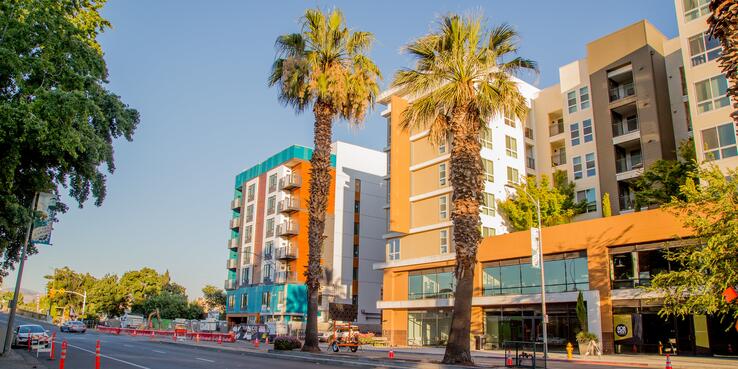
Translation: neighborhoods that were previously zoned for single-family homes or low-rise buildings near rail stations and major bus lines can now see 4-9 story apartment buildings as a matter of state law—regardless of what local zoning says.
The law takes effect July 1, 2026. LA is already preparing.
How the Tiers Work
SB 79 creates different density allowances based on the type of transit and distance from the stop:
| Transit Type | Tier 1 (Heavy Rail) | Tier 2 (Light Rail/BRT) |
| Examples | Metro B Line (Red), D Line (Purple) | Metro A/C/E/K Lines, Orange Line BRT |
| Within 200 ft | Up to 9 stories | Up to 8 stories |
| Within 1/4 mile | Up to 7 stories | Up to 6 stories |
| 1/4 to 1/2 mile | Up to 6 stories | Up to 5 stories |
City planners estimate roughly 150 transit-adjacent sites across Los Angeles will fall under SB 79’s requirements.
What LA Is Doing Now
The City Council voted unanimously in early December to begin the mapping and modeling work required to implement SB 79. They’ve allocated up to $375,000 from the General Fund for software and technical analysis.
This work will identify exactly which neighborhoods will be affected—and where the city might try to delay or modify the law’s impact.
SB 79 gives cities two tools for local flexibility:
• Delay in Effectuation: Pause enforcement in certain areas (historic districts, fire hazard zones, coastal areas) for a limited time.
• Alternative TOD Plan: A locally-crafted zoning plan that shifts where density goes—as long as total housing capacity doesn’t decrease.
Both options require state approval. City planning officials expect to present initial results early next year, ahead of key deadlines in January through March 2026.
What This Means for Property Owners
If You Own Near Transit
Your property’s development potential may have just increased dramatically. A parcel that was previously limited to single-family or low-rise development might now allow a mid-rise apartment building.
This affects both what you could build yourself and what a buyer might pay for your property. Land values near transit stops are likely to rise as developers compete for SB 79-eligible sites.
If You Own Adjacent to Transit Zones
Even if your property isn’t directly covered by SB 79, you may see significant changes to your neighborhood. A quiet street of single-family homes could gain a 6-story apartment building next door.
This is a double-edged sword. More density generally supports higher property values over time, but transition periods can be disruptive, and neighborhood character will change.
If You Own Rental Property
SB 79 projects cannot require demolition of rent-stabilized buildings with 3 or more units, or any multifamily housing that had tenants in the last 7 years. This provides some protection against displacement.
However, if you own a duplex or smaller property near transit, you may find yourself in a similar position to ED 1 situations—attractive for redevelopment but with fewer tenant protections.
The Controversy
SB 79 is already generating pushback. Some neighborhood groups and homeowners view it as an assault on local control and single-family neighborhoods. The Burbank debate is a preview: opponents there are trying to stop a bus rapid transit line specifically to avoid triggering SB 79 upzoning.
Supporters argue the law is exactly what California needs—more housing near transit reduces car dependency, supports public transit systems, and addresses the housing shortage.
Why This Law Exists
California ranks 49th among states for housing units per capita. Los Angeles must permit 456,643 new homes by 2029 to meet state requirements. SB 79 is part of 2025’s historic package of pro-housing reforms—the most significant in state history.
What to Watch
• Draft maps (early 2026): LA Planning will release detailed maps showing exactly which properties fall under SB 79.
• Delay requests: Watch for which neighborhoods seek exemptions and whether the state approves them.
• Alternative plans: If LA proposes an alternative TOD plan, it could significantly reshape where density lands.
• July 1, 2026: The law takes effect, and developers can begin submitting SB 79 projects.
What Smart Property Owners Should Do Now
• Check your proximity to transit. Use the City Planning Department’s draft SB 79 map to see if your property falls within the affected zones.
• Understand what could be built. If your property is SB 79-eligible, research the height and density allowances for your tier.
• Consider your timeline. If you’re thinking about selling, the law taking effect could significantly affect land values.
• Stay compliant. Properties with deferred maintenance or code violations are often the first targets for redevelopment. Maintaining your property protects your options.
The Bottom Line
SB 79 represents a fundamental shift in how California approaches housing near transit. For Los Angeles, with its extensive rail and bus network, the impact will be substantial.
Combined with ED 1’s permanent affordable housing streamlining and the tighter RSO rent caps, the regulatory landscape for LA property owners continues to evolve rapidly.
The property owners who’ll navigate this best are those who stay informed, understand their compliance obligations, and maintain their buildings well. The ones who’ll struggle are those caught off guard.
If you’re not sure where your property stands—whether it’s transit proximity, habitability compliance, or general condition—that’s what I do. Understanding your property’s position in this changing landscape starts with knowing its current status.
Nathan Sewell
LA Building Inspections & Compliance
Certified home inspector specializing in RHHP preparation, habitability assessments, and rental property inspections throughout Los Angeles County.
Get Ahead of Your Inspection
Book an inspection today and get ahead of your inspection. We'll help you get the most out of your inspection.
Schedule InspectionQuestions?
Email: nathan@larentalinspections.com
Call/Text: (626) 214-5929
Serving all of Los Angeles County