
Table of Contents
- Which Doors Need Self-Closers
- Garage-to-Dwelling Doors
- Corridor Doors in Apartment Buildings
- Stairwell Doors
- Fire Barrier Doors
- California’s Specific Requirements
- Door Requirements Beyond the Closer
- What I Find in Inspections
- Missing Closers
- Closers That Don’t Actually Close the Door
- Doors That Close But Don’t Latch
- Propped-Open Doors
- Disabled or Disconnected Closers
- Fire-Rated vs. Self-Closing: Different Things
- What It Costs to Fix
- Check Before Your Inspection
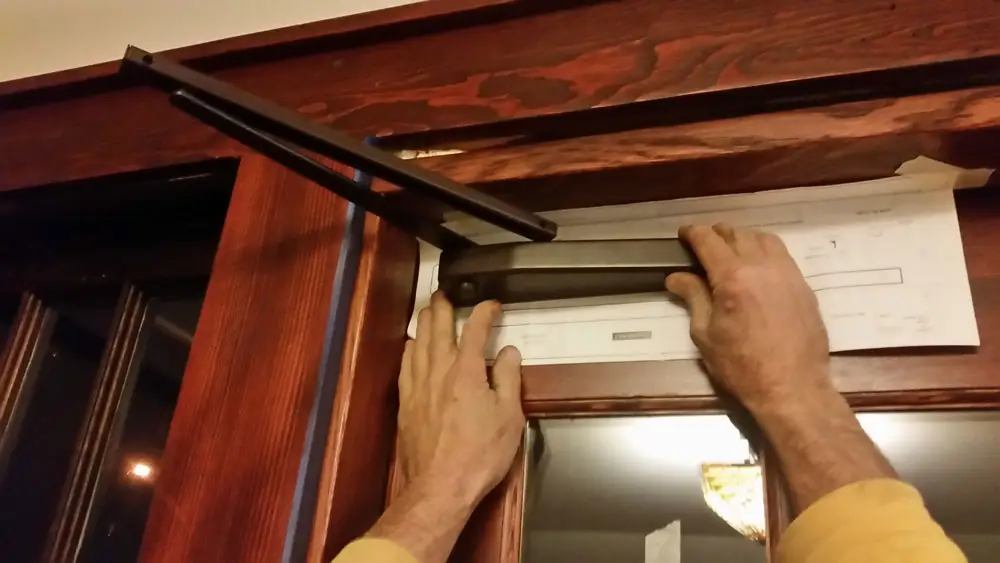
If I had to pick the single easiest violation to fix before an inspection, it would be self-closing door hardware. A door closer costs $30-50. Installation takes 20 minutes. And yet I find non-functional or missing self-closers in easily half the buildings I inspect.
The frustrating part: this is a violation that gets cited every time, costs almost nothing to fix, and yet landlords keep failing inspections over it. Usually because they don’t realize which doors need closers, or the existing closers stopped working years ago and nobody noticed.
Here’s what you need to know.
Which Doors Need Self-Closers
Not every door in your building needs a self-closing device. But these absolutely do:
Garage-to-Dwelling Doors
This is the big one. The door between any garage and the living space it connects to must be self-closing AND self-latching. California code is explicit about this—the door needs to close completely and latch without anyone touching it.
This applies whether the garage is attached to a single-family home, below an apartment, or part of a multifamily building. If you can walk from a garage into living space, that door needs a closer.
Corridor Doors in Apartment Buildings
Doors from apartments opening onto interior corridors typically need to be self-closing if the corridor is fire-rated (which it usually is in buildings with interior hallways). This includes unit entry doors in many configurations.
Stairwell Doors
Exit stairwell doors must be self-closing. These are the doors that enclose stairways used for emergency egress—if the door doesn’t close automatically, smoke can fill the stairwell and cut off escape routes.
Fire Barrier Doors
Any door in a fire barrier or fire wall needs self-closing hardware. This includes doors separating different occupancy types (like between apartments and ground-floor retail) and doors to mechanical rooms or storage areas that require fire separation.
The 2025 Code Change
Starting January 1, 2026, the new California Residential Code has additional requirements for shared accessory rooms in two-family dwellings. Doors to shared laundry rooms, storage areas, and carports will need to be self-closing or automatically closing—even in smaller buildings where this wasn’t previously required.
California’s Specific Requirements
California goes beyond the base model code in one important way: garage doors must be both self-closing AND self-latching. Some states only require self-closing. California requires the door to actually latch shut.
This means the door closer has to have enough force to push the door fully closed and engage the latch. A closer that slows the door but doesn’t fully close it doesn’t meet code. A door that closes but doesn’t latch doesn’t meet code.
Door Requirements Beyond the Closer
For garage-to-dwelling doors, California also requires:
- Solid wood door at least 1⅜ inches thick, OR
- Solid or honeycomb-core steel door, OR
- 20-minute fire-rated door assembly
Hollow-core interior doors don’t meet this requirement. Neither do standard wood doors with glass panels.
And importantly: the door cannot open directly into a bedroom. If your only access from the garage is through a bedroom, you have a code violation beyond just the self-closer.
What I Find in Inspections
These are the self-closing door problems I encounter most often:
Missing Closers
The most straightforward violation: no closer installed at all. This is especially common on garage doors in older single-family homes and smaller multifamily buildings. The door was installed without a closer, or the closer was removed at some point and never replaced.
Closers That Don’t Actually Close the Door
The closer is installed, but the door doesn’t close all the way. Usually this is an adjustment issue—the closer valve needs to be tuned so it has enough force to push the door fully shut. Sometimes the closer is worn out and needs replacement. Either way, a door that stops 2 inches from the frame doesn’t meet code.
Doors That Close But Don’t Latch
In California, self-closing isn’t enough—the door has to latch. I frequently find doors where the closer brings the door to the frame, but the latch doesn’t engage because the strike plate is misaligned, the latch is worn, or the closer doesn’t have enough force to overcome the latch resistance.
Propped-Open Doors
Tenants prop doors open for convenience. Maintenance staff props doors open while working. The door has a perfectly good closer, but someone wedged a doorstop under it. This is a violation—if the door is required to be self-closing, propping it open defeats the purpose.
Disabled or Disconnected Closers
Sometimes tenants find door closers annoying and disconnect them. The arm gets removed, or the closer mechanism gets jammed. If you can see a closer mounted but the door doesn’t close, check whether someone has disabled it.
The Wear Pattern
Door closers wear out over time—figure 10-15 years of regular use before they start losing effectiveness. If your building is 20+ years old and still has the original closers, there’s a good chance they’re not closing doors properly anymore. Test them: let the door go from fully open and watch whether it closes completely and latches.
Fire-Rated vs. Self-Closing: Different Things
This confuses people, so let me clarify: a fire-rated door and a self-closing door are not the same thing. You can have one without the other.
Fire-rated door: A door assembly (door, frame, hardware) that has been tested and certified to resist fire passage for a specific time period (20 minutes, 45 minutes, 90 minutes, etc.). Fire-rated doors have labels from testing agencies.
Self-closing door: A door equipped with a device (closer, spring hinges, etc.) that causes it to close automatically when released.
Most fire-rated doors are also required to be self-closing—but not all self-closing doors need to be fire-rated. A garage door to the house needs to be self-closing, but it can be a solid wood door that’s not formally fire-rated.
Here’s where it matters: if you’re replacing a door that’s supposed to be fire-rated, you need a proper fire-rated door assembly. If you’re just adding a closer to an existing door that meets the solid-core requirements, you don’t necessarily need a fire-rated assembly.
What It Costs to Fix
This is one of the cheapest violations to correct:
Door closer (surface-mounted): $30-75 depending on quality
Installation (DIY): 20-30 minutes with basic tools
Installation (handyman): $50-100 per door
Self-closing hinges (alternative): $40-80 per set of three
Adjustment of existing closer: 5 minutes, no cost
Compare that to the cost of failing an inspection: official follow-up inspections, potential fines, and the stress of being on a compliance deadline.
Check Before Your Inspection
Walk your property and check every door that should be self-closing:
- Open the door fully and let go. Does it close completely on its own?
- Listen for the latch. Does the latch engage? Can you push the door open without turning the handle?
- Check the closer mechanism. Is it visibly damaged? Leaking hydraulic fluid? Disconnected?
- Look for obstructions. Has someone propped the door open or blocked the closer?
- Test the door itself. Is it a solid-core door, or a hollow-core interior door that doesn’t meet code?
For each door that fails these tests, you need to either adjust the closer, replace the closer, or replace the door. Do it before your inspection and this becomes a non-issue.
The Bottom Line
Self-closing door violations are embarrassingly easy to fix. A $40 closer and 20 minutes of work can prevent a failed inspection. Don’t be the landlord who gets cited for something this simple.
When in doubt, test every door that leads from a garage to living space. If it doesn’t close and latch on its own, fix it.
Get Ahead of Your Inspection
Book an inspection today and get ahead of your inspection. We'll help you get the most out of your inspection.
Schedule InspectionQuestions?
Email: nathan@larentalinspections.com
Call/Text: (626) 214-5929
Serving all of Los Angeles County