
Table of Contents
- The Scenario I See Constantly
- Single-Family vs. Multifamily: Completely Different Rules
- For Single-Family and Duplexes
- For Multifamily Buildings
- What Triggers Upgrade Requirements
- Repairs That Usually Don’t Trigger Upgrades
- Repairs That Can Trigger Upgrades
- What I Actually Find in the Field
- Drywall Problems
- Door Problems
- Penetration Failures
- The ADU Conversion Trap
- What You Should Do
- Before Any Garage Ceiling or Wall Work
- If You’re Facing an RHHP or SCEP Inspection
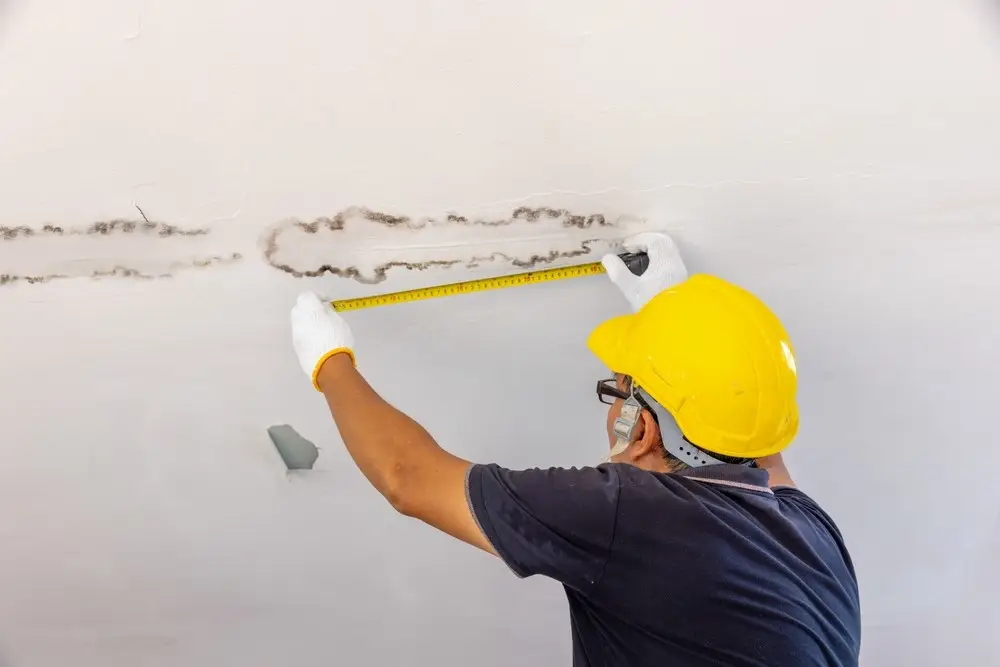
Here’s a scenario I see constantly: A landlord has water damage in the garage ceiling of their fourplex. They hire a handyman to replace the damaged drywall. Simple repair, right?
Not necessarily. Depending on the scope of that repair and the type of building, they may have just triggered a requirement to bring the entire garage ceiling up to current fire-rating standards—a project that can easily cost ten times what they budgeted for the patch.
The fire separation between garages and living spaces is one of the most misunderstood code requirements I encounter in multifamily buildings. And the confusion isn’t just among landlords—I’ve seen plenty of contractors get it wrong too.
The Scenario I See Constantly
The garage ceiling in a multifamily building serves a critical safety function: if a car catches fire in the garage, that ceiling needs to give residents in the unit above enough time to escape. That’s why California requires fire separation between garages and living spaces.
The problem is that the requirements are completely different for single-family homes versus apartment buildings—and most people don’t know the difference until they’re mid-project and a building inspector shuts them down.
The Core Distinction
Single-family or duplex: Simple drywall requirements. Half-inch on walls, ⅝-inch Type X under habitable space. No formal “fire rating” required.
Multifamily (3+ units): Full 1-hour fire-resistance-rated assembly required. This means tested systems from the UL Fire Resistance Directory, fire-taped joints, and proper firestopping at all penetrations.
These are fundamentally different standards, and a repair that’s fine in your duplex could be a major code violation in your fourplex.
Single-Family vs. Multifamily: Completely Different Rules
For Single-Family and Duplexes
The California Residential Code (Section R302.6) keeps it relatively simple. Walls separating the garage from the house need minimum ½-inch gypsum board on the garage side. If there are habitable rooms above the garage, the ceiling needs ⅝-inch Type X gypsum board.
Notice what’s not required: fire-taping the joints, using tested UL assemblies, or firestopping penetrations to any particular standard. It’s just drywall of a certain thickness. You can patch it, replace it, and move on without much ceremony.
For Multifamily Buildings
The California Building Code (Section 406.3) applies much stricter standards to apartment buildings. Multiple private garages within a building need 1-hour fire barriers. Garages beneath dwelling units need a 1-hour fire-resistance-rated floor-ceiling assembly.
What does “1-hour fire-resistance-rated” actually mean? It means the assembly has been tested to ASTM E119 or UL 263 standards and demonstrated that it can resist fire penetration for one hour. You can’t just use thick drywall—you need to use a specific tested assembly from the UL Fire Resistance Directory (like UL M563, L558, or M546), with fire-taped joints per GA-600 standards, and every penetration protected with listed firestop systems.
This is a completely different level of construction, and it matters when repairs are needed.
What Triggers Upgrade Requirements
This is where landlords get caught. The California Existing Building Code determines when you can simply repair what’s there versus when you need to upgrade to current standards.
Repairs That Usually Don’t Trigger Upgrades
- Patching a small hole in existing drywall
- Replacing a damaged section with matching material
- Routine maintenance that doesn’t expose the structure
The general principle is that repairs should “maintain the level of fire protection provided.” If your building has ½-inch drywall and you patch it with ½-inch drywall, you’re maintaining—not upgrading. You don’t have to bring a 1970s building up to 2025 standards just because you’re fixing water damage.
Repairs That Can Trigger Upgrades
- Level 3 alterations—work affecting more than 50% of the building area
- Change of occupancy—converting a garage to an ADU or living space
- Exposing structure—removing drywall to reveal framing
Here’s the specific language that catches people: when wall or ceiling finishes are removed exposing framing, fire separation must be made continuous using materials “consistent with existing construction or meeting new construction standards.”
The Trigger Point
If your “repair” involves removing the existing drywall and exposing the framing—rather than just patching over existing material—you may have triggered upgrade requirements. This is especially true if the work is extensive enough to require a permit.
A simple patch? Usually fine. Tearing out the whole ceiling to replace water-damaged sections? That’s where things get complicated.
What I Actually Find in the Field
After inspecting hundreds of multifamily buildings, these are the garage fire-separation issues I see most often:
Drywall Problems
Missing or damaged drywall: Holes, water damage, gaps where pipes or ducts penetrate. Any opening in the fire separation compromises its function.
Wrong thickness: ½-inch drywall where ⅝-inch Type X is required (under habitable space). This is common when previous owners or handymen didn’t understand the requirements.
Unfinished joints: In assemblies that require fire-taping, I frequently find joints that were never taped or were only mudded without the right tape and compound.
Door Problems
Hollow-core doors: The door from the garage to the house needs to be solid wood (1⅜-inch thick) or a 20-minute fire-rated door. Hollow-core interior doors don’t meet this requirement.
Missing self-closing devices: California specifically requires garage-to-dwelling doors to be both self-closing AND self-latching. The door has to close completely and latch without anyone touching it. I see missing or broken closers constantly.
Bedroom access: Doors from garages can’t open directly into bedrooms. I’ve seen this violated in converted ADUs and amateur remodels.
Penetration Failures
Unsealed penetrations: Every hole in the fire separation for pipes, wires, or ducts needs to be properly sealed. I find unsealed penetrations in almost every older building I inspect.
Plastic dryer ducts: Code requires sheet metal ducts through fire-rated assemblies. Flexible plastic or foil ducts are common but don’t meet code.
Back-to-back electrical boxes: When electrical boxes are installed on opposite sides of a fire separation, they need to be offset by at least 24 inches horizontally. Back-to-back boxes create a fire pathway.
The ADU Conversion Trap
The most expensive version of this problem I see is garage-to-ADU conversions. Converting a garage to living space is a change of occupancy—and that triggers current code requirements for fire separation between the new ADU and any adjoining structure.
If you’re converting a garage that’s attached to your existing house or part of a multifamily building, you’ll need:
- 1-hour fire-resistance-rated separation between the ADU and adjacent units
- Proper fire-rated door assemblies
- All penetrations properly firestopped
- Potentially sprinklers, depending on the configuration
I’ve seen ADU projects where the fire separation work alone cost more than the rest of the interior buildout. The requirements aren’t unreasonable—they protect people from fire. But they need to be budgeted from the start, not discovered mid-project when the building inspector shows up.
What You Should Do
Before Any Garage Ceiling or Wall Work
- Determine your building type. Is it a single-family home, duplex, or multifamily? The rules are fundamentally different.
- Check what’s there now. What thickness drywall? Is it Type X? Are joints taped? Understanding what you’re starting with helps you understand what you need to match.
- Understand the scope. Are you patching over existing material, or are you removing drywall and exposing framing? The latter is much more likely to trigger upgrade requirements.
- Check permit requirements. Will this work require a permit? If so, the building department will enforce current code.
If You’re Facing an RHHP or SCEP Inspection
Garage fire separation is checked during habitability inspections. If your garage ceiling has visible damage, holes, or gaps, it will likely be cited. The good news: if you’re just patching to maintain existing conditions, you typically don’t need to upgrade the entire assembly. Fix the damage with matching materials and document what you did.
The Bottom Line
The fire separation between your garage and living space exists to save lives. Understanding when you need to meet current standards versus when you can simply maintain what’s there can save you thousands of dollars and weeks of project delays.
When in doubt, get a professional opinion before you start tearing things apart.
Get Ahead of Your Inspection
Book an inspection today and get ahead of your inspection. We'll help you get the most out of your inspection.
Schedule InspectionQuestions?
Email: nathan@larentalinspections.com
Call/Text: (626) 214-5929
Serving all of Los Angeles County