Table of Contents
- The Prompt We Ran
- The Checklist AI Generates
- Smoke Detectors and CO Alarms
- Electrical
- Plumbing and Water
- Windows, Doors, and Egress
- Heating and Cooling
- Mold, Pests, and General Condition
- What Happens After They Find Something
- Why Landlords Miss These Things
- Run the Checklist Yourself
- The Bottom Line
- Don’t Wait for the Checklist
- Questions?
I want to show you something that should change how you think about managing your rental properties.
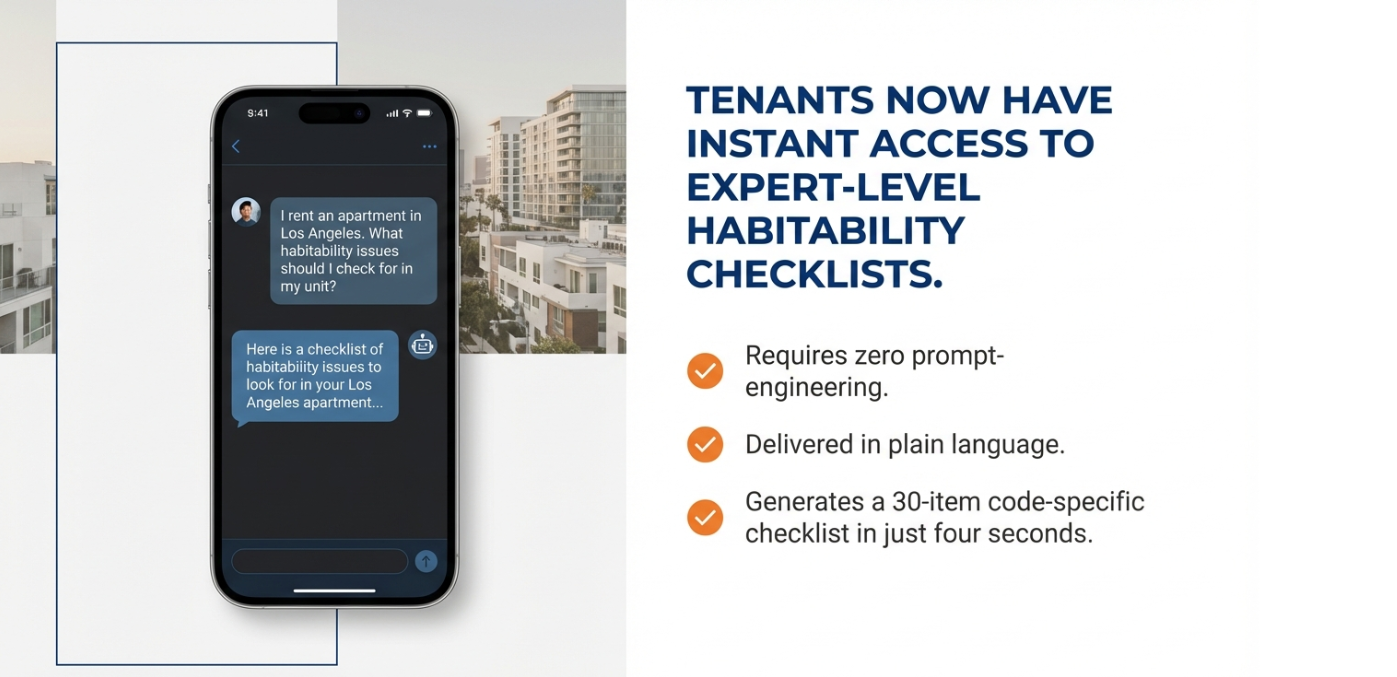
I opened ChatGPT and typed exactly what a tenant would type: “I rent an apartment in Los Angeles. What habitability issues should I check for in my unit?”
What came back was a detailed, organized checklist of roughly 30 items, broken into categories, with specific details about what to look for, which codes apply, and what to do if something is wrong. It took about four seconds.
Your tenants have access to this right now. The question is whether you know what’s on that list, and whether your units would pass it.
The Prompt We Ran
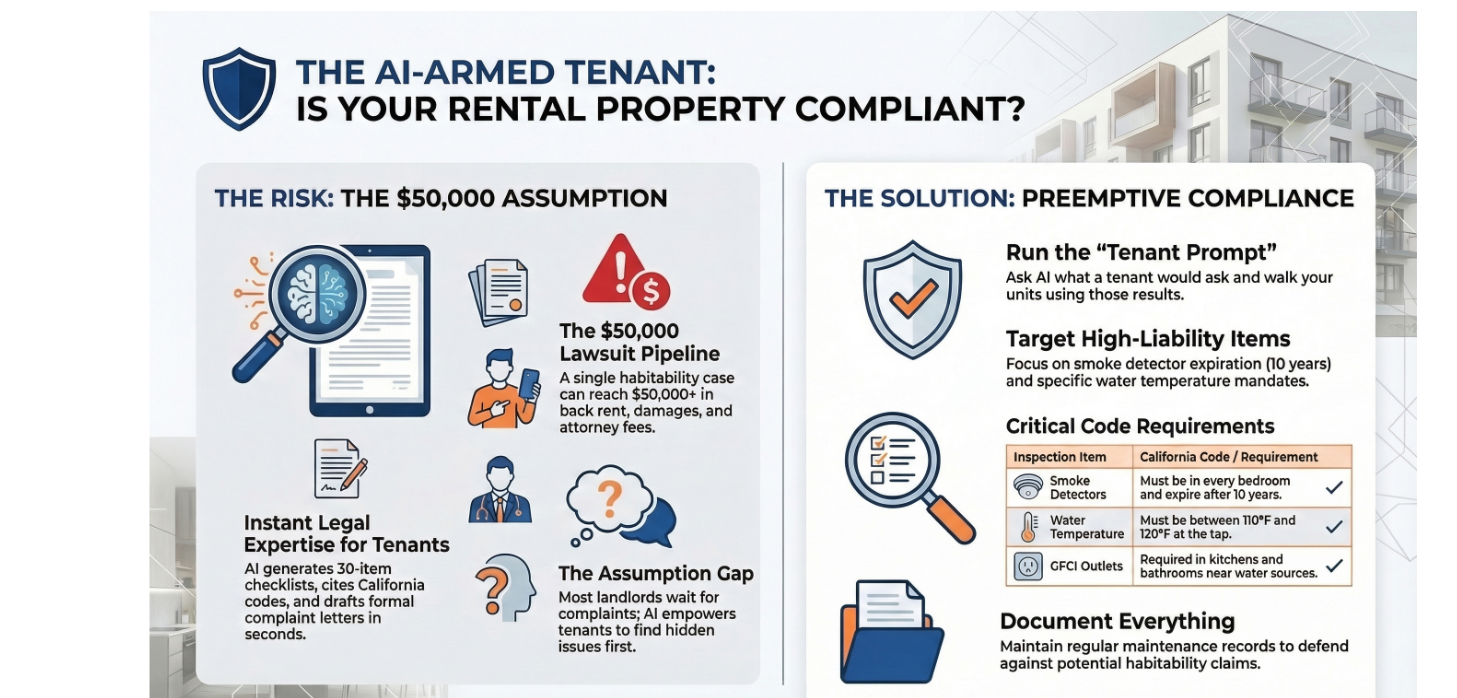
I didn’t use any special prompt engineering. I didn’t ask as a professional. I asked exactly the way a regular tenant would ask, in plain language. And the response was comprehensive, accurate, and actionable.
What’s striking is that AI doesn’t just list problems to look for. It explains why each one matters, which California code section applies, and what the tenant’s legal remedies are if the issue isn’t addressed. It turns a confused renter into an informed one in minutes.
Here is a condensed version of what comes back.
The Checklist AI Generates
Smoke Detectors and CO Alarms
1 Smoke detectors in every bedroom and hallway
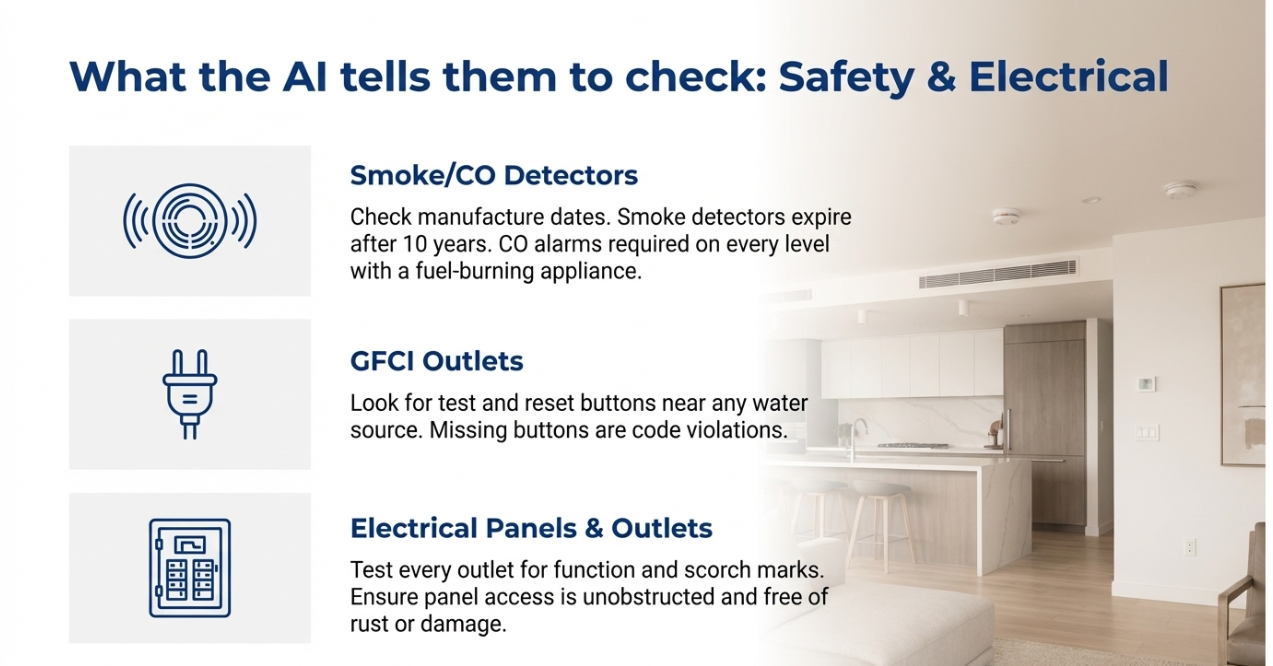
AI tells tenants to check that detectors are present, that they work when tested, and to look at the manufacture date on the back. Smoke detectors expire after 10 years. If yours are older than that, they need to be replaced, not just tested.
2 CO alarms on every level with a fuel-burning appliance or attached garage
Many older LA apartments are missing CO alarms entirely or have them in the wrong locations. AI explains exactly where they’re required under California Health & Safety Code 17926.
Electrical
3 GFCI outlets in kitchens, bathrooms, and laundry areas
AI tells tenants to look for the outlets with the “test” and “reset” buttons near any water source. If the outlets near the sink or in the bathroom don’t have those buttons, that’s a code violation.
4 Outlets that work, no exposed wiring, no scorch marks
Tenants are told to test every outlet in the unit and look for discoloration, warm cover plates, or any visible wiring. AI explains that non-functional outlets or exposed wiring are immediate habitability concerns.
5 Electrical panel access and condition
AI advises tenants to check whether the electrical panel is accessible and whether there are any signs of damage, rust, or missing covers. Obstructed or damaged panels are common findings in older LA buildings.
Plumbing and Water
6 Hot water temperature
AI tells tenants to run the hot water for two minutes and test with a thermometer. California requires hot water to be available at a minimum of 110°F but not exceeding 120°F at the tap. AI even suggests buying a cheap thermometer at a hardware store to document it.
7 .Leaks under sinks, around toilets, and near water heaters
Tenants are told to check under every sink, around the base of every toilet, and near the water heater for signs of active leaks, water damage, or mold growth. AI explains that even small leaks create habitability claims if left unaddressed.
8 Water pressure and drainage
Run every faucet and flush every toilet. AI tells tenants that inadequate water pressure or slow drains can indicate plumbing issues the landlord may be ignoring.
Windows, Doors, and Egress
9 Every bedroom window must open and be large enough for emergency egress
AI explains the specific size requirements for egress windows and tells tenants to check that bedroom windows actually open, aren’t painted shut, and don’t have security bars without quick-release mechanisms.
10 Locks on all exterior doors and windows
Every exterior door needs a working deadbolt. Every window needs a working lock. AI tells tenants exactly what to check and reminds them this is a basic security and habitability requirement.
Heating and Cooling
11 Functioning heating in every habitable room
California requires adequate heating. AI tells tenants to test every heater in the unit and document any that don’t work.
12 Cooling capability to maintain 82°F or below
AI is already telling tenants about the new cooling mandate. Every habitable room in an LA rental must be capable of maintaining 82°F or below. If your building has no AC and no plan to comply, your tenants may already know about this requirement before you do.
Mold, Pests, and General Condition
13 Visible mold anywhere in the unit
AI tells tenants to check behind furniture, under sinks, around windows, in closets, and in bathrooms. It explains that mold is a serious habitability issue and that tenants should photograph it and report it in writing immediately.
14 Pest evidence
Droppings, gnaw marks, nesting material, roach activity. AI advises tenants to document pest evidence with photos and timestamps, and explains that pest infestations are a habitability violation the landlord is responsible for addressing.
15 Handrails, stairs, and trip hazards
Loose handrails, damaged stairs, uneven flooring. AI explains that these are safety hazards and that the landlord has a duty to maintain common areas and unit interiors in safe condition.
This Is Not the Full List
What I’ve shown above is a condensed version. The actual AI response covers ventilation, kitchen appliance condition, garbage disposal, bathroom exhaust fans, ceiling and wall condition, flooring, lighting in common areas, and more. A tenant who follows up with additional questions can go even deeper into specific code sections and legal remedies.
What Happens After They Find Something
The checklist is only the beginning. What makes AI dangerous for non-compliant landlords is what happens after a tenant identifies a problem.
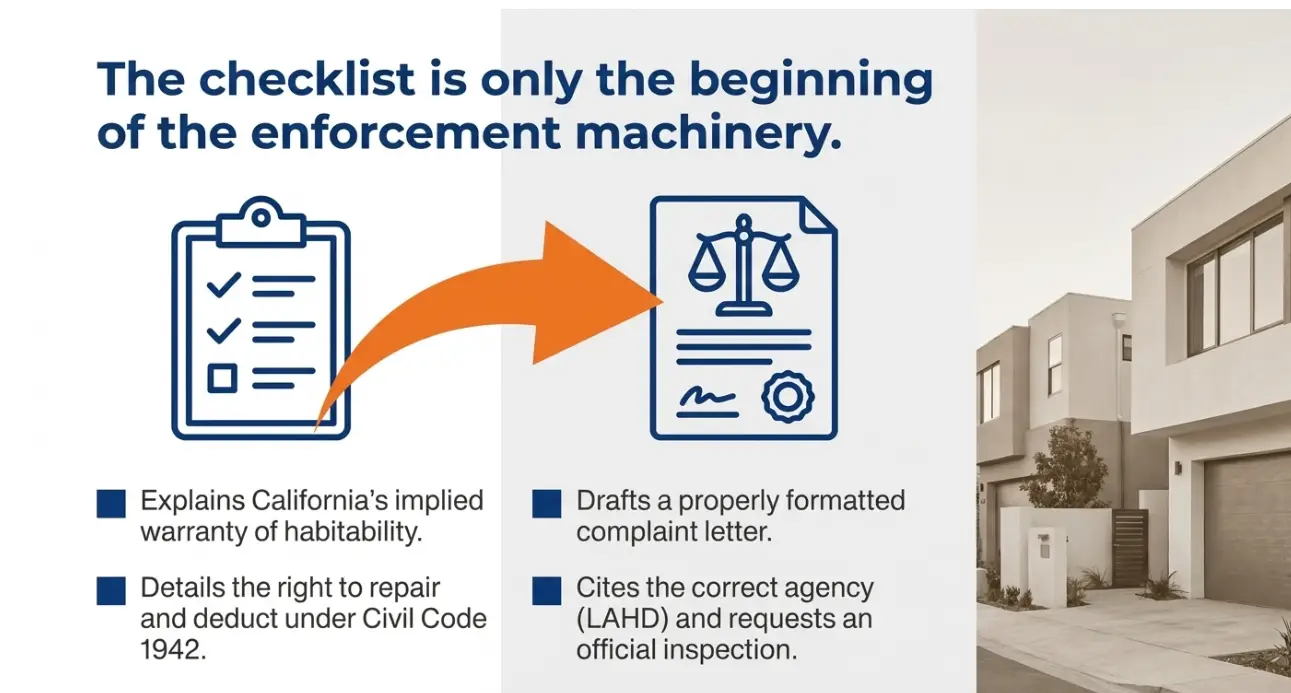
A tenant who finds mold under the bathroom sink can ask AI: “I found mold in my apartment. What are my rights as a tenant in Los Angeles?” In seconds, they get an explanation of California’s implied warranty of habitability, the landlord’s duty to remediate, the tenant’s right to repair and deduct under Civil Code 1942, the option to withhold rent, and the process for filing an LAHD complaint.
Then they can ask AI to draft the complaint letter. And it will. Properly formatted, citing the correct code sections, addressed to the correct agency, with a timeline of events and a request for inspection.
A tenant who finds expired smoke detectors can do the same thing. So can a tenant who measures water temperature and finds it at 95°F instead of 110°F. So can a tenant who discovers there are no GFCI outlets in the kitchen.
Every item on that checklist is a potential complaint. Every complaint triggers enforcement machinery. And every piece of documentation the tenant creates along the way becomes evidence in a potential habitability lawsuit.
The Lawsuit Pipeline
There is an entire category of attorneys in Los Angeles who represent tenants in habitability cases on contingency. The tenant pays nothing upfront. When one of these attorneys gets involved, the demand isn’t for a smoke detector replacement. It’s for back rent, health damages, emotional distress, relocation costs, and attorney’s fees on both sides. A single case can reach $50,000 or more. AI is making their intake pipeline dramatically more efficient because tenants are arriving with photos, checklists, code references, and timelines already assembled.
Why Landlords Miss These Things
Most of the items on this checklist are not expensive to fix. A smoke detector costs $15. A GFCI outlet costs $20 plus installation. Adjusting a water heater thermostat costs nothing. The issue is not cost. The issue is awareness.
Most landlords don’t inspect their occupied units regularly. They update units when a tenant moves out. Between turnovers, they respond to complaints if they come in, and otherwise assume everything is fine. That assumption is where the exposure lives.
A smoke detector that was working when the tenant moved in three years ago may have expired since then. A slow leak under the kitchen sink may have created mold the landlord doesn’t know about. A GFCI outlet may have failed. The water heater may have drifted out of the safe temperature range. None of these things announce themselves. They develop quietly, and unless someone is checking, they go unnoticed.
The difference now is that someone is checking. The tenant with the ChatGPT checklist is doing the inspection you didn’t do. And they’re documenting what they find.
Run the Checklist Yourself
Here is the simplest advice I can give any landlord reading this: run the same prompt your tenant would run. Open ChatGPT. Type “What habitability issues should I check for in a rental apartment in Los Angeles?” Read the response. Then walk every unit you own and check each item.
Better yet, build this into your regular maintenance routine. Not once a year. Regularly. Track when smoke detectors and CO alarms were last replaced. Check water temperature quarterly. Verify that GFCI outlets are functional. Look under sinks. Test windows. Document everything.
The landlords who do this don’t get surprised. They don’t get demand letters. They don’t end up on the wrong side of a habitability lawsuit. They know the condition of every unit because they checked it themselves, before their tenant did.
The landlords who don’t do this are betting that their tenants won’t think to ask. That bet used to be safe. It isn’t anymore.
The Bottom Line
AI has handed every tenant in Los Angeles a free habitability inspector. It works 24 hours a day, it knows California code better than most property managers, and it tells tenants exactly what to look for, exactly what their rights are, and exactly how to take action.
You can either know what that checklist says and make sure your units pass it, or you can wait for your tenant to run it and find out what you missed.
One of those options costs you a few hours and a few hundred dollars in maintenance. The other can cost you tens of thousands.
The checklist is right there. Run it first.
NS
Nathan Sewell
LA Building Inspections & Compliance
Helping LA property owners understand building conditions, compliance requirements, and habitability standards. Professional inspections for rental properties, due diligence, and RHHP/SCEP preparation.
Don’t Wait for the Checklist
Get a professional assessment of your rental units before your tenants run their own inspection. We check everything AI tells them to look for, and more.
Questions?
Call: (626) 214-5929
Email: nathan@larentalinspections.com
Service Area: LA County & Orange County
LA Building Inspections
(626) 214-5929 nathan@larentalinspections.com
© 2026 LA Building Inspections & Compliance. All rights reserved.
Get Ahead of Your Inspection
Book an inspection today and get ahead of your inspection. We'll help you get the most out of your inspection.
Schedule InspectionQuestions?
Email: nathan@larentalinspections.com
Call/Text: (626) 214-5929
Serving all of Los Angeles County