
Table of Contents
- Why Bother With Permits?
- What Permit Records Reveal
- Work Done Without Permits
- Permits That Were Never Finaled
- Permits That Don’t Match Reality
- The Property’s History
- Real Examples From Recent Inspections
- Yes, This Can Complicate Things
- Why It’s Worth It Anyway
- If You’re Buying
- If You’re Selling
- If You Already Own
- How I Research Permits
- Final Thoughts
- Know Your Property’s Full Story
- Questions?
I’m going to be honest with you: pulling permit records adds time to my inspections. It sometimes reveals problems that make transactions more complicated. Occasionally, it surfaces issues that the buyer would rather not know about.
I do it anyway. Every time.
Here’s why—and why it matters whether you’re buying, selling, or just trying to understand what you own.
Why Bother With Permits?
Most home inspections are purely visual and functional. The inspector tests whether things work: Does the outlet have power? Does the faucet run? Does the heater produce heat? This is valuable—but it has a significant blind spot.
A visual inspection can’t tell you whether work was done legally. It can’t tell you if that beautiful addition was ever inspected. It can’t reveal that the electrical panel was upgraded by someone who wasn’t a licensed electrician. It can’t show you that the “permitted” bathroom remodel was actually permitted as a closet conversion and was never finaled.
Permit records fill these gaps. They tell you what the city or county knows about the property—and just as importantly, what they don’t know.
What Permit Records Reveal
Work Done Without Permits
This is the big one. In LA, I estimate that 40% of properties I inspect have some unpermitted work. Sometimes it’s minor—a water heater replaced without a permit. Sometimes it’s major—an entire ADU built without any permits whatsoever.
Unpermitted work matters because:
- It may not have been built to code, creating safety risks
- It wasn’t inspected, so problems went uncaught
- It creates disclosure obligations when you sell
- It can affect insurance coverage
- It may need to be brought up to code—or removed—at some point
Permits That Were Never Finaled
This is surprisingly common. Someone pulls a permit, does the work, and never calls for the final inspection. The permit sits “open” forever. This means:
- The work was never verified to meet code
- There may be a lien or hold on the property
- Future permits may be blocked until it’s resolved
- Insurance companies are increasingly checking for this
Permits That Don’t Match Reality
Sometimes permits were pulled, inspections were done, but what was actually built doesn’t match what was permitted. The permit says “300 square foot addition” but the addition is 500 square feet. The permit says “bathroom remodel” but they also moved the kitchen.
The Property’s History
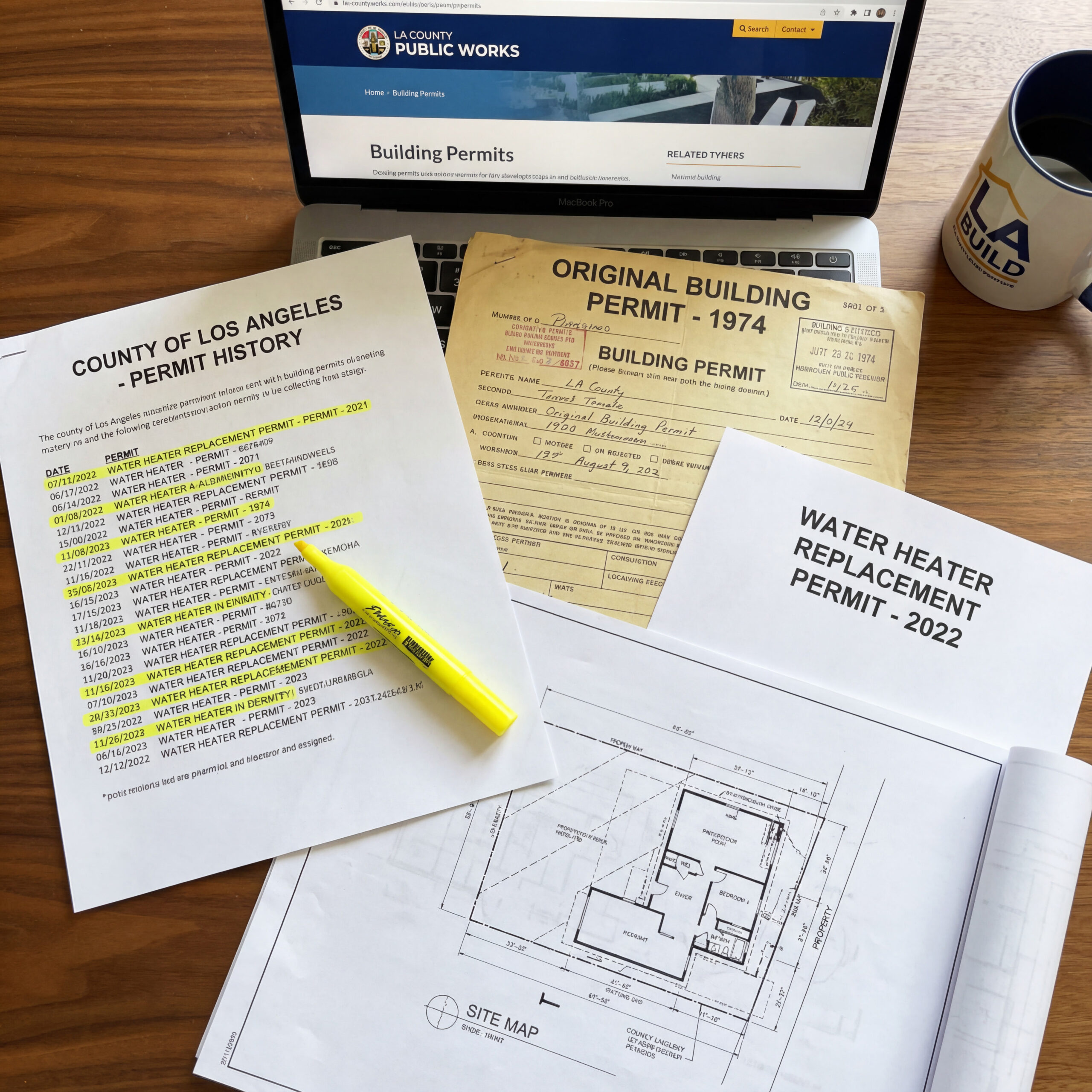
Permit records tell a story. They show when the house was built, what the original configuration was, and how it’s changed over time. This context helps me understand what I’m looking at during the physical inspection.
The Information Gap
Sellers often don’t know their property’s permit history. The current owner may have bought the house with unpermitted work already in place. They may not realize that the “bonus room” over the garage was never permitted. Permit research reveals what everyone has forgotten—or what someone hoped you’d never find out.
Real Examples From Recent Inspections
Case Study
The Kitchen That Wasn’t a Kitchen
Beautiful 1960s home with an updated kitchen. Permit records showed permits for “interior remodel” but nothing for the gas line that now served the range. Further research revealed the original house had an electric stove. Someone ran a gas line—probably 20 years ago—without permits. The gas work was competent, but without permits, there was no inspection, no verification of proper installation, and a disclosure issue for the seller. Buyer negotiated a credit for a licensed plumber to inspect and document the work.
Case Study
The ADU That Didn’t Exist
Property listed as a “house with ADU.” Permit records showed the property as a single-family residence. The ADU—a converted garage with full kitchen and bathroom—had no permits whatsoever. Not just no final inspection; no permits ever pulled. The buyer was planning to rent the ADU for income. I had to explain that they’d be renting an illegal dwelling unit, with all the liability that entails. They renegotiated the purchase price significantly to account for the cost of either legalizing or removing the ADU.
Case Study
The Electrical Panel Mystery
Standard inspection of a 1970s house. Everything looked fine—including a relatively modern electrical panel. But the permit records showed only the original 100-amp panel from 1972. At some point, someone upgraded to a 200-amp panel without permits. The work looked professional, but without permits, there was no way to verify it was done correctly. More concerning: the person who did it might not have been licensed, which could void insurance coverage if there was ever an electrical fire.
Case Study
The Open Permit From 2008
A permit for a room addition was pulled in 2008. Rough framing inspection passed. No other inspections were ever completed, and the permit was never finaled. The addition had been finished and occupied for 15 years. But technically, the electrical, plumbing, insulation, and final inspections never happened. The city could theoretically require the walls to be opened for inspection. More practically, this open permit would be a red flag for any future buyer or lender.
Yes, This Can Complicate Things
I won’t pretend that permit research always makes life easier. Sometimes it reveals problems that:
Delay transactions: Discovering unpermitted work in escrow can require renegotiation, additional inspections, or time to resolve open permits.
Reduce property values: A property with significant unpermitted work may be worth less than one with clean permit history.
Create difficult decisions: If you already own a property with unpermitted work, discovering it forces you to decide whether to legalize, disclose, or live with the risk.
Upset sellers: Some sellers don’t appreciate having their property’s permit issues documented. They’d rather the buyer didn’t know.
Why It’s Worth It Anyway
Here’s the thing: these problems exist whether or not you know about them. The unpermitted ADU doesn’t become permitted just because nobody checked. The open permit doesn’t close itself. The liability doesn’t disappear because you remained ignorant.
Knowing about permit issues gives you options:
If You’re Buying
- You can negotiate price reductions for issues you’ll inherit
- You can require the seller to resolve issues before closing
- You can make an informed decision about whether to proceed
- You can budget for future legalization costs
- You won’t be blindsided when you try to sell someday
If You’re Selling
- You can address issues before listing
- You can price appropriately if issues remain
- You can disclose properly and reduce liability
- You won’t have deals fall apart late in escrow
If You Already Own
- You can decide whether to legalize work before it becomes an issue
- You can ensure proper insurance coverage
- You can prepare for future sale complications
- You can make informed decisions about additional improvements
The Bottom Line
Yes, pulling permit records can delay a project and make things more complicated. But at the end of the day, if you’re selling or looking to get the full value out of your property, knowing your permit history is essential. The problems don’t go away because you didn’t look for them—they just become surprises at the worst possible time.
How I Research Permits
For properties in LA City, I use the LADBS online portal to pull permit history. For unincorporated LA County, I use the County’s system. Other cities within the county have their own systems—Pasadena, Long Beach, Glendale, and others each maintain separate records.
I look for:
- Original building permit and certificate of occupancy
- All subsequent permits and their status
- Any permits that were pulled but never finaled
- Gaps between what’s permitted and what exists
- Red flags that suggest unpermitted work
Then I correlate this with what I see during the physical inspection. If I see a 500-square-foot addition but the permits only show 300 square feet, that’s a finding. If I see a bathroom where the plans show a closet, that’s a finding. If I see professional-looking work with no permits at all, that’s a finding.
Final Thoughts
I include permit research in my inspections because I’ve seen what happens when people don’t know their property’s history. I’ve seen deals fall apart in escrow. I’ve seen new owners discover they’re liable for previous owners’ shortcuts. I’ve seen people unknowingly buy significant legal problems along with their new homes.
Yes, it takes extra time. Yes, it sometimes reveals uncomfortable truths. But knowing is always better than not knowing—especially when six or seven figures are on the line.
If you want an inspection that includes permit research, that’s what I do. If you just want someone to test outlets and faucets, there are plenty of inspectors who’ll do that for less money. But if you want to understand what you’re actually buying or selling, the permit history is part of the story.
Nathan Sewell
LA Building Inspections & Compliance
Certified home inspector with an architecture background, specializing in permit research, code compliance assessment, and thorough property inspections throughout Los Angeles County.
Know Your Property’s Full Story
Get an inspection that includes permit research—not just function testing.
Questions?
Call/Text: (626) 214-5929
Email: nathan@larentalinspections.com
Serving all of Los Angeles County
LA Building Inspections & Compliance
(626) 214-5929 nathan@larentalinspections.com labuildingcompliance.com
© 2025 LA Building Inspections & Compliance. All rights reserved.
Get Ahead of Your Inspection
Book an inspection today and get ahead of your inspection. We'll help you get the most out of your inspection.
Schedule InspectionQuestions?
Email: nathan@larentalinspections.com
Call/Text: (626) 214-5929
Serving all of Los Angeles County