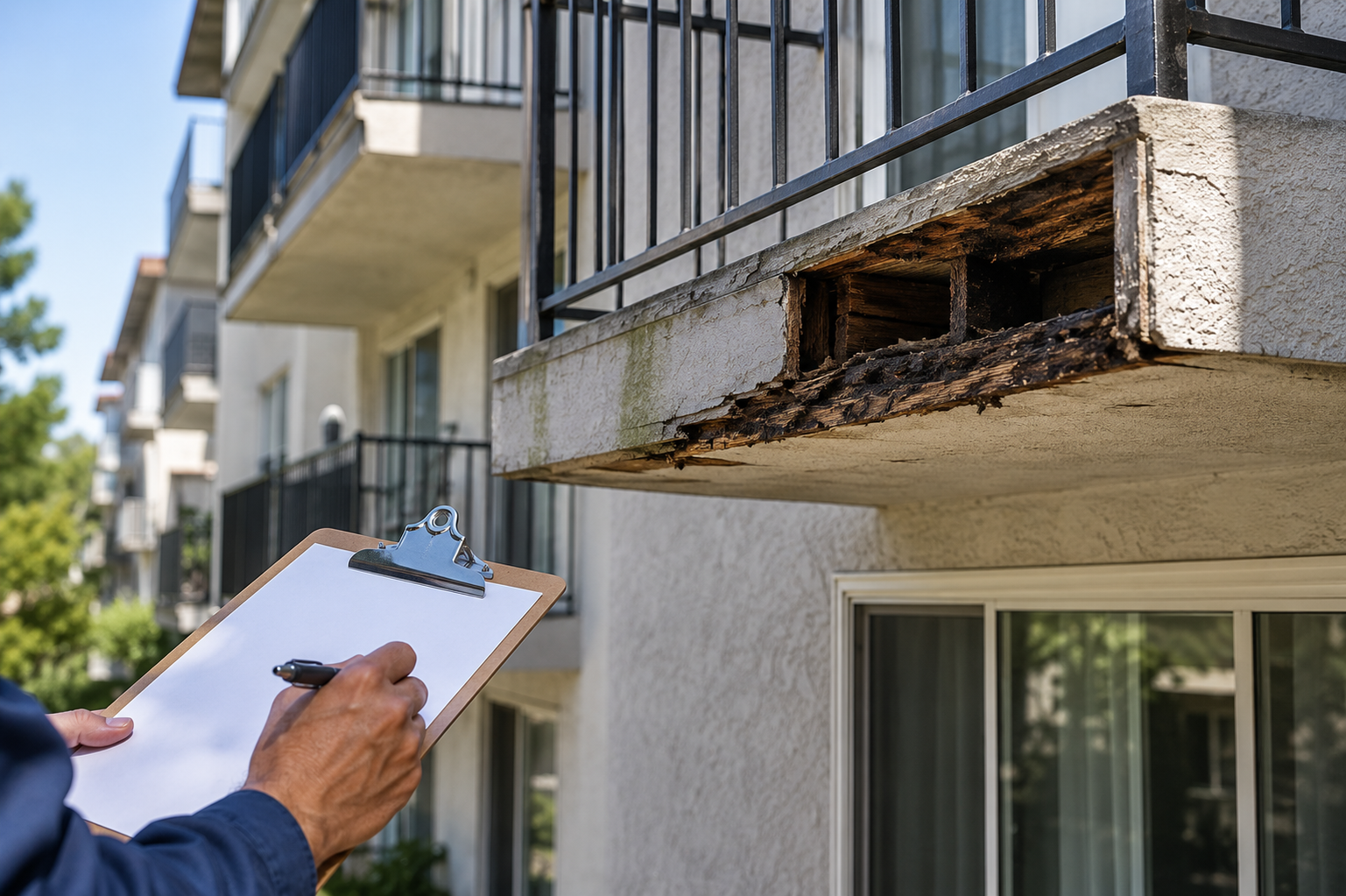

California passed two distinct balcony inspection laws after the 2015 Berkeley balcony collapse that killed six people and injured seven others. The collapse traced back to hidden wood rot at a ledger board connection, water had been intruding for years behind waterproofing systems that had failed silently. The legislative response produced SB-721 vs SB-326 California property owners now navigate together, two laws with similar goals but different scopes, deadlines, and responsible parties.
I work with apartment owners, HOA boards, and property managers across Los Angeles County who often confuse the two or assume only one applies to them. Understanding SB-721 vs SB-326 is the first step toward staying compliant and avoiding costly enforcement consequences.
Different Property Types: Who Each Law Covers
The most basic distinction between the two laws is the type of property each governs. The California balcony inspection law differences start here.
SB-721 applies to apartment buildings. Specifically, rental apartment buildings with three or more units. Owners, or their property managers, are directly responsible for scheduling, completing, and documenting the SB-721 balcony inspection California law requires. The scope covers exterior elevated elements (EEEs) including balconies, decks, walkways, exterior stairways, and the structural and waterproofing components supporting them.
SB-326 applies to condominiums and HOA-managed properties. The HOA, not individual unit owners, is responsible for inspecting common-area EEEs. Private balconies attached to individual units may fall under separate HOA bylaws or unit-owner responsibility, depending on the association’s governing documents. The inspection scope under SB-326 also covers railings, guardrails, walkway surfaces, and waterproofing in common areas.
Both laws focus on wood and wood-based structural components. If a balcony or elevated element is built entirely of concrete or steel with no wood structural members, it may be exempt, though documentation proving exemption status is often still required. Mixed construction is the trap I see most often. A concrete balcony with a wood ledger board connection is still covered. A steel-framed walkway with wood decking is still covered.
Inspection Timelines and Deadlines
The two laws operate on different timelines, and this is where many property owners get caught off guard.
SB-721 First Deadline
January 1, 2026. This deadline has now passed. Apartment owners who haven’t yet completed their inspections are out of compliance, and penalties for non-compliance can reach $500 per day until inspections are completed and findings documented. The reinspection cycle is every six years from the date of the initial inspection.
SB-326 First Deadline
January 1, 2025. This deadline has also passed. HOAs that haven’t completed their inspections are in catch-up mode, and findings from the inspection must be incorporated into the HOA’s reserve study. The reinspection cycle is every nine years rather than six.
Many of the property owners I talk with are now navigating both deadlines simultaneously: apartment owners catching up on SB-721, HOA boards finalizing SB-326 compliance and folding the results into reserve planning. Knowing where you stand on the inspection requirements for each law clarifies what action to take next and how quickly.
Who’s Responsible: The Compliance Burden
The compliance burden differs sharply between the two laws.
Under SB-721, the apartment owner carries direct responsibility. There is no shared governance structure to lean on. Owners must:
- Schedule the inspection with a qualified professional (licensed structural engineer, licensed architect, licensed general contractor with at least five years of relevant experience, or the local building official)
- Receive the written inspection report
- Address any identified issues within the timeframes the report specifies
- Maintain documentation for future reinspection cycles
- Report severe deficiencies to the local enforcement agency when required
Under SB-326, the HOA carries responsibility for common-area inspections, but the structure is more collaborative. HOA boards must:
- Engage qualified professionals to inspect common-area EEEs
- Incorporate findings into the reserve study
- Allocate funds for any identified repairs through reserve planning
- Communicate findings to unit owners as required by governing documents
- Schedule reinspection every nine years from the initial inspection date
For HOA boards, the integration with the reserve study is the central operational difference. SB-326 inspection requirements affect not just safety planning but financial planning. A well-timed inspection produces both compliance documentation and the data needed for accurate reserve forecasting.
Inspection Scope and What Gets Evaluated
The scope of both inspections overlaps significantly, but the focus areas differ slightly based on property type.
For SB-721, I evaluate:
- Load-bearing structural components of balconies and decks
- Ledger board connections (the structural connection where elevated elements attach to the building)
- Waterproofing systems and flashing
- Railings, guards, and stair handrails
- Walking surfaces and underlying support structures
- Evidence of wood decay, water intrusion, or structural compromise
For SB-326, I evaluate similar elements but with additional emphasis on:
- Common-area railings and guardrails
- Walking surface conditions across multiple units
- Connection conditions between common areas and individual unit boundaries
- Waterproofing in shared exterior spaces
- A representative sample of similar elements when full inspection of every balcony is impractical (specific sampling methodology should be confirmed with the inspector)
Both inspection types produce written reports with photo documentation, prioritized findings, and clear next steps. The output is what makes the property’s compliance position visible to enforcement agencies, lenders, insurers, and buyers.
Habitability and the Broader Compliance Picture
For California rental property owners, balcony inspections sit within a larger regulatory framework. A habitability inspection in California may surface issues that overlap with balcony compliance such as water intrusion, structural concerns, exterior safety, but habitability addresses a broader scope.
Under California’s implied warranty of habitability, rental properties must maintain safe and sanitary conditions across structure, plumbing, electrical, heating, sanitation, fire safety, and pest control. A habitability inspection assesses these systems against state and local requirements. For LA County properties in unincorporated areas, the Rental Housing Habitability Program (RHHP) adds another inspection layer on a four-year cycle.
I handle SB-721, SB-326, and RHHP inspections across LA County, which lets owners coordinate overlapping compliance work strategically rather than scheduling each visit separately. Water intrusion at a balcony often signals problems behind walls. Structural concerns at a ledger board often correlate with deferred maintenance elsewhere on the property.

Navigating Compliance with Confidence
For California property owners facing the differences between SB-721 and SB-326, the path forward is straightforward when broken into clear steps:
- Identify which law applies. Apartments with three or more units → SB-721. Condos and HOA-managed properties → SB-326.
- Check your position against the timeline. Both deadlines have passed. Non-compliant properties may be accumulating exposure.
- Engage a qualified professional. The law requires specific licensing.
- Document everything. Reports, photos, repair records, and reinspection schedules all matter for future cycles.
- Integrate findings strategically. For HOAs, fold results into reserve studies. For apartment owners, fold results into capital planning and maintenance budgets.